There was a time when I admired Donald J. Trump, not for his policies, but for his apparent resilience. He seemed capable of surviving political, legal, and personal crises that would have ended most careers. His refusal to quit, his instinct to fight back, and his sheer stamina gave the impression of strength.
Over time, however, that impression collapsed.
What once looked like resilience increasingly revealed itself as dominance without discipline, aggression without responsibility, and defiance without purpose. Trump’s behavior consistently demonstrates a lack of conscientiousness: disregard for norms, institutions, truth, and even basic consistency. Loyalty is demanded, but rarely reciprocated. Accountability is avoided, not embraced.
Equally troubling is his emotional instability. Criticism is treated as persecution, disagreement as betrayal, and compromise as weakness. This fuels a pattern of grievance, paranoia, and hostility that poisons discourse rather than leading it. Leadership requires emotional regulation; Trump thrives on emotional escalation.
Most damaging of all is his relentless self-centeredness. Everything becomes about personal victory, personal humiliation, or personal revenge. The public good is secondary to the preservation of ego. When antisocial behavior, lying, intimidation, scapegoating, becomes routine rather than exceptional, admiration turns into disillusionment.
I eventually concluded that what I once mistook for strength was merely survival instinct untethered from character. Trump may be educated and experienced, but education without integrity and experience without responsibility amount to little. In the end, I no longer see a fighter worthy of respect, only someone endlessly struggling to protect himself, offering nothing larger than that struggle.
Artificial Intelligence is no longer a speculative technology on the horizon: it is an operational reality reshaping economies, institutions, and human work. While most discussions about AI focus narrowly on tools, models, or short-term productivity gains, the true future of AI is broader and more consequential: AI is evolving from a passive instrument into an active cognitive partner embedded across society. Understanding this transition is essential for leaders, professionals, and policymakers who want to remain relevant in an AI-driven world.
1. From Narrow Automation to Generalized Intelligence
Early AI systems were designed to perform narrowly defined tasks, recognizing images, translating text, or optimizing logistics. The next phase is characterized by generalized capability, systems that can reason across domains, adapt to new contexts, and collaborate with humans in complex problem-solving.
Key shifts include: Multimodal intelligence (text, image, audio, video, and action); Persistent memory and long-term context; Autonomous goal decomposition and planning; Self-improvement through feedback loops. This does not imply human-level consciousness, but it does mean human-comparable competence across many cognitive tasks.
2. AI as a Cognitive Infrastructure
AI is becoming a foundational layer, similar to electricity or the internet, rather than a standalone product. In the future, AI will be: Embedded invisibly in workflows; Integrated into decision-making systems; Continuously adaptive to users and environments. Organizations will not ask “Should we use AI?” but rather “How is intelligence flowing through our systems?” Competitive advantage will come from orchestrating intelligence, not merely adopting tools.
3. The Transformation of Work and Expertise
In the coming years, AI will not simply eliminate jobs; it will redefine expertise. Routine cognitive labor will be increasingly automated, while human value will concentrate in areas where: Judgment under uncertainty matters; Ethical, social, and contextual reasoning is required; Creativity and strategic synthesis are essential; Accountability and trust are critical.
The most valuable professionals will be those who can: Think systemically; Ask high-quality questions; Supervise and align AI systems; Translate between technical, business, and human domains. In short, the future belongs to AI-augmented professionals, not AI-replaced ones.
4. Governance, Trust, and Alignment
As AI systems gain autonomy and scale, governance becomes a central challenge. The future of AI will be shaped as much by policy and ethics as by technology. Critical issues include: Model transparency and explainability; Bias, fairness, and representational harm; Data ownership and privacy; Accountability for AI-driven decisions; Alignment with human values and societal goals.
Nations and organizations that establish trustworthy AI frameworks will gain long-term legitimacy and public acceptance.
5. The Rise of Personal and Collective AI
We are moving toward a world where individuals have persistent personal AI agents, teams collaborate with shared AI copilots and organizations operate with collective intelligence systems.
These systems will learn individual preferences and goals, act as cognitive extensions of the user and coordinate knowledge across groups at scale. This represents a fundamental shift in how humans think, learn, and collaborate.
6. Risks, Limits, and Reality Checks
Despite rapid progress, AI is not magic. The future will include technical limitations and failures, over-reliance and skill atrophy, concentration of power among a few actors and misuse in surveillance, manipulation, and conflict.
Responsible progress requires clear-eyed realism, not blind optimism or reflexive fear.
Choosing the Future of AI
The future of AI is not predetermined. It will be shaped by how organizations deploy it, how governments regulate it, how professionals adapt to it and how society defines acceptable use.
AI’s ultimate impact will depend less on what the technology can do, and more on what we choose to do with it. Those who engage early, thoughtfully, ethically, and strategically, will help define an AI-enabled future that amplifies human potential rather than diminishes it.
J. Michael Dennis ll.l., ll.m.
Based in Kingston, Ontario, Canada, J. Michael Dennis is a former barrister and solicitor, a Crisis & Reputation Management Expert, a Public Affairs & Corporate Communications Specialist, a Warrior for Common Sense and Free Speech. Today, J. Michael Dennis help executives and professionals understand, evaluate, and responsibly deploy AI without hype, technical overload, or strategic blindness.
A Consultant’s Perspective on What Actually Matters
As an AI Consultant, I spend far less time discussing models, benchmarks, or product launches than most people expect. Those details matter, but they are not where the real transformation is happening.
The future of Artificial Intelligence will not be decided by algorithms alone. It will be decided by how organizations, leaders, and institutions choose to integrate intelligence into their decision-making, operations, and culture.
From the field, the signal is clear: AI is moving from a tool you “use” to a system you work with.
1. AI Is Becoming Strategic Infrastructure, Not Software
Most organizations still approach AI as a technology purchase. That mindset is already obsolete. AI is rapidly becoming cognitive infrastructure, a layer that influences: How decisions are made; How work is coordinated; How knowledge flows across the organization; How risks are identified and mitigated.
In the near future, competitive advantage will not come from having access to AI (everyone will), but from how intelligently it is embedded into business processes and governance structures.
This is not an IT problem. It is a leadership problem.
2. The Real Shift: From Automation to Augmentation
The dominant narrative focuses on job displacement. In practice, what I observe is something subtler and more disruptive: the redefinition of expertise.
AI excels at: Pattern recognition; Synthesis at scale; Speed and consistency. Humans remain essential for: Judgment under uncertainty; Contextual and ethical reasoning; Strategic prioritization; Accountability.
The future belongs to professionals who can collaborate with AI systems, supervise them, and translate their outputs into real-world decisions. Organizations that fail to reskill their people around this reality will fall behind, regardless of how advanced their tools appear.
3. Why Most AI Initiatives Fail
From a consulting standpoint, AI failures rarely stem from weak models. They stem from: Poor problem definition; Misaligned incentives; Lack of data governance; Absence of ownership and accountability; Unrealistic expectations driven by hype.
Successful AI adoption requires discipline: Clear use cases tied to measurable outcomes; Human-in-the-loop design; Change management, not just deployment; Continuous evaluation and iteration.
AI is not a one-time implementation. It is an ongoing organizational capability.
4. Trust, Governance, and the Consultant’s Blind Spot
As AI systems gain autonomy, trust becomes the limiting factor.
Leaders increasingly ask: “Can we explain this decision?”; “Who is accountable if this goes wrong?”; “Are we exposing ourselves to legal or reputational risk?”
The future of AI will be constrained, and/or enabled, by governance. Consultants and leaders who ignore this dimension are setting their organizations up for long-term failure.
Responsible AI is not a moral luxury; it is a strategic necessity.
5. The Rise of Personal and Organizational AI Agents
We are entering a phase where AI will be persistent, personalized, and proactive.
In practical terms: Executives will work with AI advisors; Teams will share AI copilots; Organizations will develop collective intelligence systems.
The consultant’s role will evolve accordingly: from recommending tools to architecting intelligence ecosystems aligned with strategy, culture, and values.
6. What Leaders Should Be Doing Now
From my perspective, the organizations that will thrive are already: Treating AI as a board-level topic; Investing in AI literacy across leadership; Designing governance before scaling deployment; Experimenting in controlled, high-impact areas; Focusing on augmentation, not replacement.
Waiting for “mature” AI is a strategic error. Maturity comes from engagement.
Conclusion: AI Will Reward Clarity, Not Hype
The future of AI will not favor the loudest adopters or the most aggressive automators. It will favor those who approach AI with clarity of purpose, discipline of execution, and respect for human judgment.
As an AI Consultant, my role is not to sell technology, it is to help organizations think clearly about intelligence: how it is created, governed, and applied. Those who do this well will not just survive the AI transition. They will shape it.
J. Michael Dennis ll.l., ll.m.
Based in Kingston, Ontario, Canada, J. Michael Dennis is a former barrister and solicitor, a Crisis & Reputation Management Expert, a Public Affairs & Corporate Communications Specialist, a Warrior for Common Sense and Free Speech. Today, J. Michael Dennis help executives and professionals understand, evaluate, and responsibly deploy AI without hype, technical overload, or strategic blindness.
To become a millionaire by the age of 30 may seem like a lofty goal, but it is not impossible. Get ready to learn valuable insights and practical tips that can put you on the path to building wealth and realizing your dreams and become a millionaire before you hit 30!
Set Clear Financial Goals
Setting clear financial goals is the foundation for becoming a millionaire. Start by identifying what you truly want to accomplish financially. Do you want to retire early? Start your own business? Whatever it may be, write it down and make it specific.
Next, break your goals into actionable steps. Break them down into smaller, more manageable tasks that will help you make progress towards your ultimate goal. Creating a timeline for achieving each milestone is crucial for staying on track. Set deadlines for yourself and hold yourself accountable. It is important to be realistic with your timeline, but make sure to push yourself to achieve the milestones in a timely manner.
Develop a Millionaire Mindset
Believing in your ability to become a millionaire is the first step towards achieving it. It is important to have a positive mindset and believe that you have the potential to create wealth. By embracing a growth mindset, you open yourself up to learning and growth opportunities that will help you along your journey.
Embracing failure and learning from it is another key aspect of developing a millionaire mindset. Failure is not the end, but rather a stepping stone towards success. View failures as valuable learning experiences and opportunities for growth. Learn from your mistakes and adjust your strategies as you go along.
Staying focused and persistent is essential. Becoming a millionaire does not happen overnight, and it requires consistent effort and dedication. There will inevitably be challenges and setbacks along the way, but it is important to stay focused on your goals and persist through any obstacles that come your way.
Educate Yourself
Knowledge is power when it comes to wealth creation. Educate yourself on personal finance and wealth-building principles. Read books on personal finance and wealth creation to gain insights from experts in the field.
Taking courses or attending seminars on investing can also be beneficial. These educational opportunities can provide you with the knowledge and skills needed to make informed investment decisions. Stay updated with current market trends by following financial news and reading reputable publications. Being knowledgeable about the market can help you identify potential investment opportunities and make well-informed decisions.
Finding mentors in your field of interest can be invaluable. Seek out individuals who have achieved the level of success you desire and learn from their experiences. They can offer guidance, advice, and support as you navigate your own financial journey. Surrounding yourself with successful individuals can also influence and inspire you to reach for higher levels of success.
Save and Invest Wisely
Creating a budget and sticking to it is fundamental for managing your finances effectively. A budget helps you track your income and expenses, enabling you to identify areas where you can reduce unnecessary spending and save money. It is important to monitor your budget regularly and adjust as needed to ensure you are on track to meet your savings goals.
Minimizing unnecessary expenses is crucial for maximizing your savings potential. Evaluate your expenses and determine if there are any areas where you can cut back. This could include reducing dining out, entertainment expenses, or luxury purchases. By making small sacrifices now, you can allocate more funds towards savings and investment opportunities.
Saving a portion of your income regularly is essential for building wealth. Make it a priority to save a certain percentage of your income each month. Set up automatic transfers to a savings or investment account to ensure consistency in your savings habits. Over time, your savings will accumulate and compound, helping you reach your financial goals faster.
Diversifying your investments is important for managing risk and maximizing returns. Spread your investments across different asset classes, such as stocks, bonds, real estate, and alternative investments. This diversification helps to mitigate risk by reducing the impact of any single investment performing poorly. Consult with a financial advisor to determine the best investment strategy for your specific goals and risk tolerance.
Taking calculated risks is a key component of wealth creation. It is important to assess the potential risks before making investment decisions, but also be willing to take calculated risks when the potential for reward outweighs the potential for loss. Be cautious and do thorough research before making any investment decisions, but also be willing to step out of your comfort zone.
Start a Side Hustle
A side hustle can be a powerful tool for increasing your income and accelerating your path to becoming a millionaire. Identify your skills and interests and explore different income-generating opportunities that align with them. It could be freelancing, starting a small business, or investing in a rental property.
Creating a business plan is essential for starting a successful side hustle. Outline your goals, target market, competitive landscape, and financial projections. A well-thought-out business plan will guide your decision-making process and provide a roadmap for success.
Allocate time and effort to your side hustle. Treat it as a legitimate business and dedicate consistent time and energy towards its growth and success. It may require sacrifices and hard work in the beginning, but the potential for financial rewards can be significant.
Network and Build Connections
Networking and building connections can open doors to new opportunities and accelerate your path to success. Attend industry events and conferences to meet like-minded individuals and potential mentors or business partners. These events provide valuable opportunities for learning, networking, and gaining insights from industry experts.
Joining professional organizations related to your field of interest can also be beneficial. These organizations often offer networking events, educational resources, and access to a community of professionals who can provide support and guidance.
Building a strong online presence is essential in today’s digital age. Create a professional LinkedIn profile and connect with influential individuals in your field. Share valuable content, contribute to online discussions, and actively engage with others in your industry. This online presence can help you establish credibility, build connections, and open opportunities for growth.
Work Hard and Smart
To become a millionaire, it is important to work hard and smart. Set ambitious goals for your career and constantly seek opportunities for growth and advancement. Be proactive in seeking out new challenges and responsibilities that push you to develop new skills and expand your knowledge.
Continuously improving your skills is crucial in staying competitive in today’s ever-evolving job market. Attend workshops, take online courses, and seek out mentors who can help you enhance your skill set. The more valuable and marketable your skills are, the greater your earning potential.
Staying motivated and disciplined is essential for long-term success. It is important to maintain a strong work ethic and remain focused on your goals, even when faced with obstacles or setbacks. Develop effective time management strategies and prioritize your tasks to ensure you are making progress towards your goals.
Learn to Manage Risks
Managing risks is an integral part of wealth creation. Before making investment decisions, it is important to assess potential risks and understand the potential impact on your financial well-being. Conduct thorough research and consult with financial professionals before investing in any particular asset or market.
Diversifying your investment portfolio is a key risk management strategy. By spreading your investments across different asset classes and sectors, you reduce the risk of one investment negatively impacting your overall portfolio. Diversification helps to ensure that the impact of any individual investment’s poor performance is minimized.
Having an emergency fund is important for managing unexpected financial hardships. Aim to have at least three to six months’ worth of living expenses saved in an easily accessible account. This fund serves as a safety net in case of job loss, medical emergencies, or other unforeseen circumstances.
Obtaining appropriate insurance coverage is crucial for managing various risks. Make sure you have insurance policies in place to protect yourself, your assets, and your loved ones. This includes health insurance, life insurance, disability insurance, and property insurance. Consult with an insurance professional to ensure you have adequate coverage based on your specific needs.
Stay Disciplined and Avoid Debt
Living within your means is essential for achieving financial success. It is important to spend less than you earn and avoid excessive debt. When you spend more than you earn, you create a cycle of financial stress and struggle to reach your wealth creation goals.
Avoid unnecessary debt whenever possible. Only take on debt for essential purchases, such as a home or education, and avoid high-interest debt, such as credit card debt. Pay off high-interest debts as soon as possible to minimize the amount of interest you pay over time.
Use credit wisely and responsibly. Establish a good credit history by making timely payments and keeping your credit utilization ratio low. This will enable you to access favorable interest rates and terms when you need to take on debt for important investments, such as purchasing a home or starting a business.
Conclusion
Becoming a millionaire requires commitment, persistence, and a clear plan of action. By setting clear financial goals, cultivating a millionaire mindset, educating yourself, saving and investing wisely, starting a side hustle, networking, and building connections, working hard and smart, managing risks, staying disciplined, and avoiding unnecessary debt, you can pave your way to financial success. Commit to your goals, stay focused and persistent, learn from successful self-made millionaires, and most importantly, believe in your ability to create wealth.
“You may not know what is coming down the pike, the article posited, but if you are wearing the right clothes and sporting the right hairstyle when the acquiring company shows up, you could stand out and survive.”
The fact is, despite the fear and hype, generative AI remains an enigma.
A recent study reveals that 63% of leaders feel that AI must play a significant role in their business but 91% do not yet know how. At the same time, there is a palpable sense of urgency: over half of C-suite executives believe that their business will be dead by 2030 if they do not embrace AI. Uncertainty and speed are scary bedfellows: 79% of my readers and followers do not trust corporations to make responsible choices about implementing AI.
Most experts believe that AI will support, not replace, human performance. But people who use AI will likely replace those who do not. You have a choice. You can ignore AI until you have a better sense of how it will affect your life. Or you can be proactive. There has never been a better time to lean on your growth mindset, to become an avid student of this vast and fast technology. Here are five ways to build the skills you need to survive.
Get Ahead Of The Learning Curve
The jargon around AI is like a new language. Start by learning as much as you can. Knowledge is power, and with a little work, you can flex yours.
Beyond just learning how AI works, explore where it works or does not. AI has promise, but it is not without pitfalls. For example, many companies are using hiring algorithms to surface talent and missing good people because their algorithms are too narrow and are inundated with resume when their algorithms are too broad. Understand how companies are using AI well and where they are stumbling.
Explore the philosophical and moral quandaries that underlie AI’s potential for good and bad. Embracing the rabbit hole means exploring at every turn. It is amazing how proficient you can become when you let your curiosity take the reins.
Experiment A Lot
Adopting an experimental mindset is the best way to gain in-the-trenches experience. Start with a non-proprietary work project. Feed it to a large language model like ChatGPT and ask it what it would add. Prompt it to rephrase your work or to recast it for someone without expertise. Because you are experimenting in a field you already know, you will quickly gauge the value of its inputs. It will also encourage you to see your own work from different angles.
Experimenting with this technology does not have to mean more work. You can play with AI, write your memoir in the style of your favorite author, animate your doodles or your children’s artwork, use AI to turn a still picture into an avatar that talks to you, chat with historical figures. The AI-driven experimental possibilities are endless.
Do not Accept AI At Face Value
Large language models, with their very human-like communications, can feel misleadingly when they produce data-rich answers in record time. But they can hallucinate, make up responses where their training data is lacking based on plausible but incorrect logic. And AI algorithms have been known to rely on shortcut learning, causing false correlations, amplifying discrimination, and producing unreliable results. Do not accept AI’s outputs at face value. Challenge assumptions and triangulate with other research.
In my first foray with AI, I sought research-based insights, together with the relevant sources. Impressed by the outcomes, I looked up the sources, only to find that the authors and the journals were real, but the papers did not exist. Treat AI like a first-year intern: “Eager To Please But Far From Perfect”.
Get Really Good At Asking Questions
New technologies cultivate new jobs. And AI is proving to be fertile soil. The World Economic Forum named prompt engineering, “the art and science of asking the right questions”, the #1 job of the future in 2023. Asking good questions helps you learn from diverse perspectives. Engaging with algorithms is no exception: better questions give you more outputs to explore a wider array of possibilities and find better solutions.
The most effective human questions are open-ended, curious, and personal. But when it comes to a Large Language Model [LLM], clarity is king. Frame the context of the inquiry and the perspective you want the LLM to take, a specific point of view, a particular profession, or an identity to assume. Provide context: what you need and what you want to do with it, examples, process steps and even desired references. Finally, spell out the output, including format and style. The art of good prompts allows AI to handle the rote retrieval of technical information, freeing humans to access and curate a wealth of knowledge, and to combine and rapidly test new ideas in even the most technically complex contexts. Done well, it is a powerful man-machine partnership.
Do not Go It Alone
In the zeal to adapt, do not forsake the superpower that makes humans more effective than any machine: our ability to work and thrive in community.
Throughout history, humans have leveraged their collective strength to make sense of thorny challenges and new threats. Working with others helps you experiment broadly, debate ethical implications, and share results to learn faster. And collaboration neutralizes the anxiety that comes with impending existential change. Widening the group of AI learners in your organization helps you to be part of crafting the strategy instead of waiting to see where the chips fall. Build a broadly diverse learning community to garner the best and most varied ideas. Your collective wisdom will make you and your colleagues indispensable to your organization’s AI future.
Thankfully, you do not need a makeover to weather the AI storm. But your mindset probably does. This is not the time to take a wait-and-see approach. Even if it is hard to imagine how generative AI will affect your job right now, the train is already barreling down the tracks. To stand out from the crowd and be ready for what comes, get ready now. A deeper understanding of AI and its trajectories is one of the most effective job skills you can develop for today and tomorrow. The only thing we know for sure is that AI will fundamentally change the world of work. Instead of waiting for the road to clear, forge the path.
On Monday March 18, Donald Trump’s lawyers revealed that Trump had failed to secure the $464 million appeals bond he needs to avoid paying the half-billion-dollar penalty as he appeals the New York civil fraud judgment against him. Securing the bond was a “practical impossibility… about 30 different bond companies having turned down Trump’s request, in part because very few will consider a bond of anything approaching that magnitude, and the rest will not accept hard assets such as real estate as collateral,” they said.
Trump is running out of time.
Unless Trump is able to obtain an appeals bond before then, New York Attorney General’s office plans to collect from Trump on Monday, March 25. As soon as March 25, New York prosecutors and law enforcement could initiate a wide-ranging action to freeze and then seize Trump’s assets.
Forbes estimates that Trump has about $400 million of cash and liquid securities, some of that money being already encumbered. Earlier this month, Trump obtained a $91.6 million appeals bond for the second New York civil judgment against him for defaming and sexually assaulting E. Jean Carroll. Those same funds cannot be used to collateralize a second bond. Trump needs collateral of $557 million to post the $464 million bond.
Trump is facing a liquidity crisis.
Over $540 million in legal fines currently weigh on Trump, threatening to deplete his $400 million estimated cash reserves and force him to sell or borrow against his real estate empire. It is a well-known fact that Trump could have easily avoided his actual $540 Million cash crunch. There are two viable paths that would have saved him a lot of lifelong headaches, not to mention money.
Trump could have simply invested the estimated $400 million inheritance he received from his father in 1999. Or, in 2017, he could have divested his business empire when he became president in January 2017, and simply reinvested the proceeds in the stock market.
In both cases, if the billionaire ex-president had made this one move years ago, he would be much richer and more liquid today. He may even have avoided the $450 million bill for lying about his assets. In 2017, if Trump had diested and reinvested, Trump would likely be at least $2 billion richer. If he had invested his inheritance, it would have boosted his fortune by at least $1 billion.
In short, Donald Trump is in a financial bind today not just because he committed financial fraud on an enormous scale, sexual abuse, and defamation. He is also here because his business empire has not kept up with the markets.
The massacre of more than 1,200 Israeli citizens, most of them civilians, has focused global attention on the question of what Hamas is and what it represents.
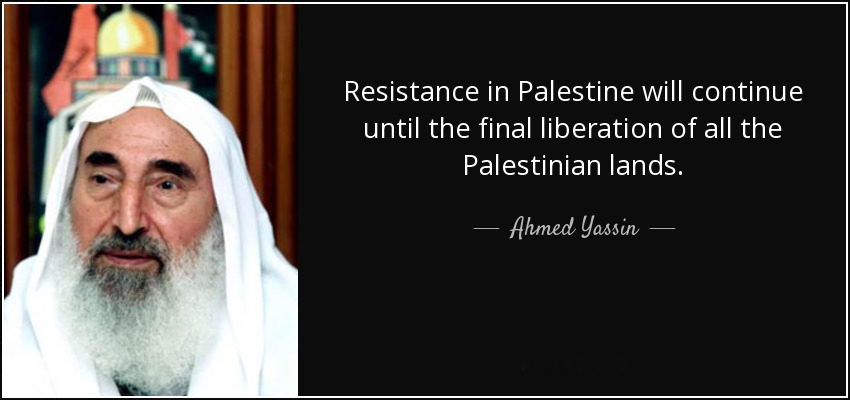
An acronym for the Islamic Resistance Movement, Hamas was founded as an offshoot of the Muslim Brotherhood in 1987 on three pillars: religion, charity, and the fight against Israel. Under one of its key founders, the group’s spiritual leader, Sheikh Ahmed Yassin, it held an uncompromising view.
As the movement’s founding charter made clear, Hamas was dedicated from the start to extinguishing the existence of the state of Israel. It saw armed violence as part of that struggle, modelling its early armed wing on the fedayeen, Palestinian armed groups that emerged in the 1950s after the establishment of the state of Israel.
That armed wing would come to be known as the “Izz ad-Din al Qassam” brigades who, in conjunction with Islamic Jihad, from their very beginning embraced the use of terror tactics against Israel, carrying out their first suicide bombing in 1993, the movement attracting substantial popular support from teachers, surgeons, urban planners, and police in its civil administration of Gaza.
Hamas is unavoidably part of the fabric of the life in Gaza. While it runs Gaza’s health service, it is also a sinister organization committed to the mass murder of Israelis. It administers the education service while its police have broken the bones of children caught wearing scarfs signalling family affiliation with the rival Fatah movement. It also runs the courts. During the 2014 Gaza war, its forces abducted, tortured, and murdered Palestinians accused of “collaborating” with Israel and others.
For most people Hamas is represented by its armed wing, responsible for the brutal massacre at the October 7, 2023 weekend.
Along with Palestinian Islamic Jihad, after the 1993 Oslo peace accords, Hamas deployed suicide bombings as its initial weapon of choice against the peace deal, a tactic that would be seen regularly during the second intifada. Meanwhile, the Qassam brigades grew stronger, particularly in Gaza, becoming the substantial, well-armed and well-trained paramilitary force of today.
While the exact numbers are unclear and disputed, the Qassam brigades are today believed to count on several tens of thousands under arms including small boat forces, combat divers, a new para-glider force and drone operators.
The turning point for Hamas came in 2007.
After a period of deadly anarchy in Gaza, because of the 2006 Palestinian elections, Hamas-backed candidates won the largest share of the vote and seized power in the coastal Gaza enclave.
In power, Hamas, proved to be brutal and often greedy. Senior figures were implicated in damaging pyramid schemes linked to the once-flourishing smuggling tunnels to Egypt. Big villas appeared in its southern strongholds. Analysts would speak of a “black budget” which funneled money to the military wing and powerful individuals.
In this period, the messaging from senior figures in the political bureau was contradictory. As Yassin and his fellow founder Abdel Aziz al-Rantissi had done before their assassinations by Israel in 2004, Hamas leaders would suggest the possibility of a long cessation of hostilities with Israel, known as a “hudna.” That would suggest they could be pragmatic. Whether it was real or not, the threat of violence against Israel, and Jews more widely, was never far from the surface.
What would forge Hamas into its current shape was the blockade imposed by Israel in 2007 and the subsequent Gaza wars that would repeat themselves in a vicious cycle. Largely shut off from the world, the Qassam brigades grew both in size and importance. Violence became self-fulfilling. War with Israel legitimized Hamas’s role in Palestinian society and the wider Middle East.
After the 2008 Gaza conflict, support for Hamas rose sharply worldwide. This year a Hamas delegation visited Moscow and Saudi Arabia as it sought a wider international hearing.
Today, the most hard-line of the Hamas’ hardliners appear to be in the driving seat of the organization, representing the growing influence of the military wing’s shadowy head Mohammed Deif and the apparent decision by Yahya Sinwar, the current head of Hamas in Gaza, to align himself with a policy of all-out war.
There is always a way. This is your choice: you either give up or find a way.
That’s a motivational perspective! It highlights the importance of determination and problem-solving in the face of challenges. When faced with difficulties, it’s essential to stay resilient, adapt, and keep searching for solutions rather than giving up. This mindset can help individuals overcome obstacles and achieve their goals. Remember, perseverance and creativity often lead to finding unexpected ways to overcome obstacles.
The essence of deception is distraction: When asking for help, appeal to people’s self-interest, never to their mercy or gratitude.
The essence of deception is distraction. Distracting the people, you want to deceive gives you the time and space to do something they will not notice. An act of kindness, generosity, or honesty is often the most powerful form of distraction disarms people’s attention and suspicions. People turns into children eagerly lapping up any kind of affectionate gesture. This is what I call “giving before you take”. The giving makes it hard for people to notice the taking. This is a strategy with infinite practical uses. Brazenly taking something from someone is dangerous, even for the powerful. The victim of the taking may plot revenge. It is also dangerous to simply ask for what you need, no matter how politely you do it: Unless people see some gain for themselves, they may come to resent your neediness. Learn to give before you take. It softens the ground, takes the bite out of future request, or simply create distractions. The giving can take many forms: An actual gift, a generous act, a kind favor, an “honest” admission, whatever it takes.
Selective honesty is best employed on your first encounter with someone. A first impression lasts a long time. If someone believes you are honest at the start of your relationship, it will take a lot to convince them otherwise. And this gives you plenty of room to maneuver. A single act of honesty is often not enough. What is important is a reputation for honesty built on a series of act. These can be quite inconsequential. Once your reputation for honesty is established, as with first impressions, it is hard to shake.
Honesty is one of the best ways to disarm the wary, but it is not the only one. Any kind of noble, apparently selfless act will serve you. The best such act is one of generosity. Few people can resist a gift, even from the most hardened enemy. Generosity is often the perfect way to disarm people. A gift brings out the child in us, instantly lowering our defenses. Although we often view other people’s actions in the most cynical light, we rarely see the Machiavellian element of a gift, which quite often hides ulterior motives. A gift is the perfect object in which to hide a deceptive move.
Selective kindness should also be part of your arsenal of deception. By playing on people’s emotions, calculated acts of kindness can turn anyone into a gullible child. As with any emotional approach, this strategy must be practiced with caution: If people see through it, their disappointed feelings of gratitude and warmth will become the most violent hatred and distrust. Unless you can make the gesture seem sincere and heartfelt, do not play with fire.
When you have a history of deceit behind you, no amount of honesty, generosity or kindness will fool people. Any such act will only call attention to itself. Once people have come to see you as deceitful, to act honest all of a sudden is simply suspicious. In these cases, it is better to play the rogue. Nothing in the realm of success and power is set in stone. Overt deceptiveness will sometimes cover your tracks, even making you admired for the honesty of your dishonesty.
Michel Ouellette / J. Michael Dennis is a Former Attorney, a Trial Scientist, a Crisis & Reputation Management Expert, a Public Affairs & Corporate Communications Specialist, a Warrior for Common Sense and Free Speech.
Michel Ouellette / J. Michael Dennis is a Former Attorney, a Trial Scientist, a Crisis & Reputation Management Expert, a Public Affairs & Corporate Communications Specialist, a Warrior for Common Sense and Free Speech.



















 J. Michael Dennis ll.l., ll.m. Live
You must be logged in to post a comment.