JMD
Book a 30 minutes “FREE” Virtual Business / Situation Assessment Call with JMD
JMD SystemicsA division of King Global Earth and Environmental Sciences Corporation
24 Monday Jun 2019
Posted in Général / General
JMD
Book a 30 minutes “FREE” Virtual Business / Situation Assessment Call with JMD
JMD SystemicsA division of King Global Earth and Environmental Sciences Corporation
24 Monday Jun 2019
Posted in Général / General

Real change and organizational improvement only occurs with repetition over a number of weeks.
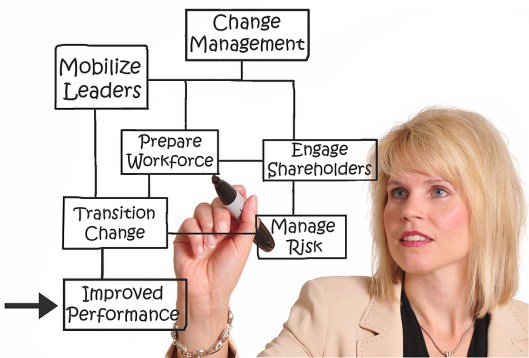
Organizations are not static and changes such as new rules and regulations, problematic customer requests, or software upgrades if not communicated well can produce uncertainty and lead to disengagement. In these and related circumstances organizations are asked to adapt, perform and influence most often without providing clear roles and responsibilities, update processes and training.
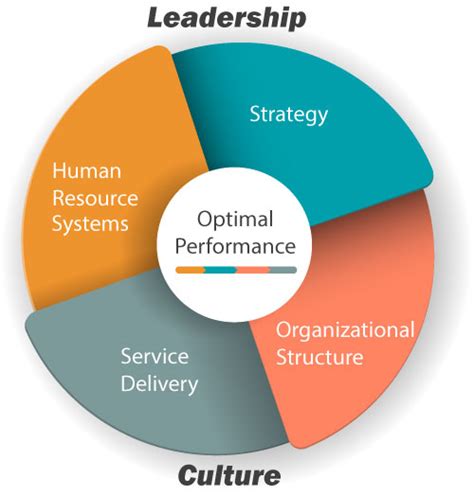
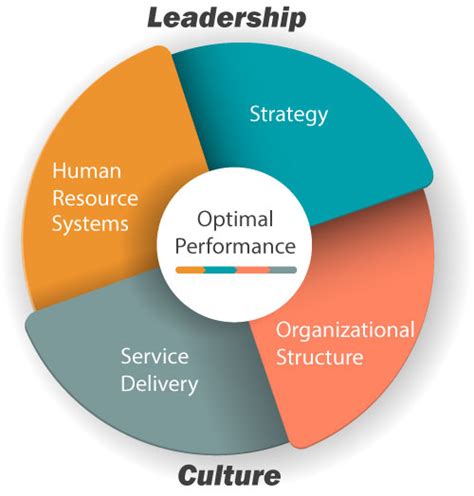
To understand where the “disconnects” are, JMD Systemics uses assessments to pinpoint areas for improvement and help to determine your best possible path forward.
Contact us to discuss how our organizational solutions are designed to provide you and your teams with a clear roadmap to help you develop plans, processes and grow your business.
JMD
Book a 30 minutes “FREE” Virtual Business / Situation Assessment Call with JMD
A division of King Global Earth and Environmental Sciences Corporation
JMD Systemics is a premier, full-service crisis management and communications firm serving business owners, corporations, businesses, non-profit organizations, individuals and governmental clients worldwide.
Headquartered in Bath, Ontario, our firm’s principal has over forty years of field experience providing crisis management, strategic communications, public affairs and public relations counsel to clients facing a broad spectrum of issues and daily challenges
31 Friday May 2019
Posted in Général / General
Tags
Here is why people and businesses call JMD Systemics:
Our sales are down; we need to grow our customer base and be more profitable.
I want a better future for my organization, my family, and myself.
Our business wants to have a better commitment to our community and the environment.
We implemented changes but there are still issues between departments; customers are telling us to fix it.
Our company has a good future but staff keeps turning over.
We need to be working like a “well oiled machine” to be profitable.
We know we need to be in compliance in important areas of our business but we’re too busy to make the changes.
We have a vision and mission but it doesn’t seem to do anything for our business.
We’ve gone through change but didn’t look at roles & responsibilities. There’s confusion about who does what.
There are trends that we need to plan for. How do we include them in our planning?
We hold quarterly meetings and provide updates but we continue to miss our targets.
I’m an entrepreneur and had a great year last year. This year I’m not doing as well.
We try to plan our time properly and still feel pulled and stressed.
Book a 30 minutes Virtual 5-Points Diagnostic Assessment Call with JMD
A division of King Global Earth and Environmental Sciences Corporation
JMD Systemics is a premier, full-service crisis management and communications firm serving business owners, corporations, businesses, non-profit organizations, individuals and governmental clients worldwide.
Headquartered in Bath, Ontario, our firm’s principal has over forty years of field experience providing crisis management, strategic communications, public affairs and public relations counsel to clients facing a broad spectrum of issues and daily challenges
29 Wednesday May 2019
Posted in Général / General

Almost everybody reads online reviews. That is why it is vital to weed out the fakes.
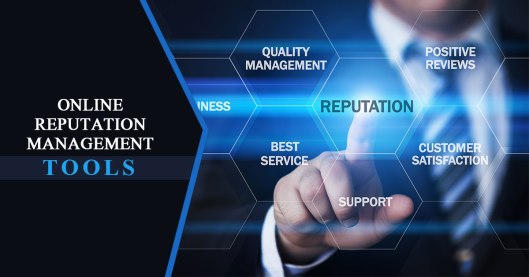
Almost everybody reads online reviews and if you have poor reviews, you may certainly say goodbye to welcoming new customers. Online reviews can make or break your business and reputation. Having a solid strategy for managing fake negative reviews is an essential part of maintaining a healthy online presence.
Online negative reviews are either real or fake. Whatever the reality, there is always something you can do about it. Before you report or respond to a negative review, the fist step is to be certain that it is a fake.
Typically, fake reviews will have a vicious or even aggressive tone, and they will also have general criticisms rather than specific ones. If you click into a reviewer’s profile and see other reviews they have posted including overly positive reviews for a competitor, this is a sure sign they are a phony.
The next best step to take is to report the reviewer to the website they posted on. This is one of the most critical steps to take in order to get that negative review fully removed. While you wait for the review to be removed, respond to them and offer a solution so other customers can see how serious you take the situation.
If you let a fake negative review slip through the cracks, it can cause major damage to your business.
Michel Ouellette, ll.l, ll.m
JMD Systemics
Business Transition & Reputation Management
Office: 613.449.3278
Skype: jmdlive
Web: www.jmdsystemics.com
Michel Ouellette [Joseph Michael Dennis], is a former attorney, a Trial Scientist, a Crisis & Reputation Management Expert, a Public Affairs & Corporate Communications Specialist, a Warrior for Common Sense and Free Speech.
Follow JMDlive on:
Pinterest, Twitter, Facebook, JMDlive.com, The Futurist Daily News, JMDsystemics.com, Tumblr and Warrior For Common Sense
Book a 30 minutes Virtual 5-Points Diagnostic Assessment Call with JMD
24 Friday May 2019
Posted in Général / General

Social media may be entertaining, but it distracts you from achieving greater, personal success. To get value, you have to create value.
Achievers use a success list, not a to do list: they have a strong sense of priority
If you want extraordinary results, narrow your focus. Do your most important work when your willpower is strongest. For many people, that’s early in the day. Ask yourself: “What is this one thing I can do that will make everything else easier? In every aspect of your life, prioritize this one thing that is most important.
For most of us, social media is probably not what is most important
Everywhere you look these days, you find online aspiring writers and artists, as well as aspiring entrepreneurs and businesses leveraging social media to promote themselves. For many of them, not to say most of them, whatever they are publishing is not unique or valuable. It does not stand out from all the other noise. As a result, many aspiring writers, artists and entrepreneurs have their hearts broken.
They spend a lot of money on fancy websites, logos, photos and newsletter services. They launch their websites, post like crazy all over social media, and wonder why there is no response.
Social media success is a side effect of quality, not the cause
You can pretty your Instagram account all you want, and upload all kinds of lovely pictures on your Facebook page. None of that stuff, by itself, will make your art or business take off. If you want to be successful with your art or business, stop spinning your wheels on social media.
Focus on these two things: “Rare” and “Valuable”
Produce things that are rare and valuable. Instead of wasting all day grooming superficial stuff on social media, spend most of your time and pour your energy into mastering a difficult skill. If it is not difficult, it will not be rare. You will not stand out, and success will elude you. Rare and valuable skills are what set you apart from everyone else.
“To get value, you have to create value”
If you are doing remarkable work and build a social ratchet that works, only then will you have a significant social media presence. On the other hand, if you spend all your time beginning at the end, grooming your social network, nothing much is going to happen.
Rome was not built in a day
There are no shortcuts to any place worth going.
Rather than trying to endlessly spruce up your website and social media posts, put in the hard work. Get up early, or stay up late honing your rare and valuable skills.
Seek the best instruction you can afford. Relentlessly practice. Constantly compare your work to the best creators or entrepreneurs. Focus on the ONE THING that you need to do to move forward.
Keep focused on your ONE THING. Get the best instruction you can. Work hard. In time, you will start producing rare and valuable work. People will start to notice. And then, maybe your stuff will be the talk of social media.
Michel Ouellette, ll.l, ll.m
JMD Systemics
Business Transition & Reputation Management
Office: 613.449.3278
Skype: jmdlive
Web: www.jmdsystemics.com
Michel Ouellette / Joseph Michael Dennis, is a former attorney, a Trial Scientist, a Crisis & Reputation Management Expert, a Public Affairs & Corporate Communications Specialist, a Warrior for Common Sense and Free Speech.
Follow JMDlive on:
Pinterest, Twitter, Facebook, JMDlive.com, The Futurist Daily News, JMDsystemics.com, Tumblr and Warrior For Common Sense
Book a 30 minutes Virtual 5-Points Diagnostic Assessment Call with JMD
15 Wednesday May 2019
Posted in Général / General

“Eventually somebody will write something unpleasant about your business. You better have a plan.”
Reputation management in the age of the internet is essential. These days, public brand sentiment is a game changer in how people shop. This is a reality that every entrepreneur must come to terms with.
The task of managing an online reputation is not an easy one, nor is it a one-size-fits-all process. Here are four things that many entrepreneurs get wrong about managing their online reputation.
1. Underestimating the value of consistency.
Managing an online reputation is not something that can be done in an afternoon or over the weekend. For as long as your business is operating, shaping and maintaining an online reputation is a job that never ends.
In the startup stage, consistently interacting with people online, responding to reviews, and creating thought leadership content won’t require a significant time commitment. However, once business picks up, maintaining consistency will start to become harder and harder. If you are spending between one and two hours per day staying on top of your online reputation, it is probably time to consider bringing on a specialist, at least on a part-time basis.
2. Assuming star ratings are all that matter.
Customer reviews are an essential ingredient to an online reputation. A big part of the process is simply getting customers to review your product, service, and overall experience.
Consumers these days have more options than ever before. People can now be extremely picky in terms of how and where they spend their money. They look to online reviews to get an unbiased third-party opinion of a brand, product, or service.
As you develop a strategy to gather reviews, you need to design prompts that give people the whole picture of what it is like to do business with you.
3. Negative sentiment should be left alone.
No one likes getting negative reviews. However, negative reviews are not the grim reaper. The way you react to bad sentiment says “WAY” more about your business than the review itself. Regardless of how painful it is to read bad reviews, you need to bite the bullet and try to respond in a positive way. If you play your cards right, you can turn this into a positive and gain a loyal customer.
Responding to negative reviews requires a certain touch.
First and foremost, you do not want to respond right away. The last thing you want is to respond while emotions are high. Second, try your best to empathize. Ultimately, your brand reputation depends on your ability to put yourself in the shoes of the customer and meet their needs. Lastly, do your best to try and take the conversation offline. The initial public response should be cordial, but then encourage the bulk of the interaction with the nitty-gritty details to take place in private.
4. Thinking there is a ‘quick-fix’ for reputation issues.
An online reputation can always take a bad turn.
“A reputation is something that can take 30 years to build, yet be completely destroyed in 30 seconds.”
In the age of social media and constant connectedness, we see crises happen all the time. If this unfortunate event happens to you, the key is to not let panic set in, as this leads to rash decisions.
In the old days of the internet, many companies assumed they could combat poor sentiment by forging their own positive reviews or paying professional writers to write long, detailed praises on major review platforms. While this certainly worked for a hot second, review sites wised up to these devious tactics. Trying to sidestep the process of gaining authentic reviews can get you into serious trouble.
Additionally, the simple fact that people today are bombarded with insane amounts of brand messaging every day, most consumers have gotten pretty good at spotting bunkum. Resorting to sketchiness to try and mend a damaged reputation can often times put you even deeper in the hole.
When you are in difficulty, you need to accept that there is no quick solution. Getting people back on your side is a long process that often times requires deep-seated change. The most important thing you can do is critically listen to what people are saying and make a conscious effort to usher in a fundamental transformation.
One last word
The task of managing your online reputation will be around as long as your business’s doors are open. Not everything is going to be peaches and cream. You are going to hit bumps in the road and need to know how to handle it.
Michel Ouellette, ll.l, ll.m
JMD Systemics
Business Transition & Reputation Management
Office: 613.449.3278
Skype: jmdlive
Web: www.jmdsystemics.com
Michel Ouellette / Joseph Michael Dennis, is a former attorney, a Trial Scientist, a Crisis & Reputation Management Expert,
a Public Affairs & Corporate Communications Specialist, a Warrior for Common Sense and Free Speech.
Follow JMDlive on:
Pinterest, Twitter, Facebook, JMDlive.com, The Futurist Daily News, JMDsystemics.com, Tumblr and Warrior For Common Sense
Book a 30 minutes Virtual 5-Points Diagnostic Assessment Call with JMD
25 Thursday Apr 2019
Posted in Général / General

Fence-sitting is no longer an option. To stay competitive, you must outpace change.
Simply managing the status quo is no longer acceptable. True leaders constantly position themselves to boldly guide their organizations into change. They think big and make great things happen in almost any circumstance.
“When the rate of change outside is more than what it is inside, be sure that the end is near.”
To win today, individuals and organizations must be able to change internally faster and more dynamically than the speed and magnitude of external change and, to win tomorrow, they must create internal change capacity and capability faster than the rate of change projected to happen externally.
Irrelevance, and even extinction, is inevitable when leaders fail to heed age of disruption principles.
As the world continues to spin at a faster rate, it will throw off problems and opportunities at a higher rate and in every nook and cranny of the globe. It is the leader who will identify these problems and opportunities, surround himself with great talent and move forward with disruptive visions that will completely alter the landscape.
Whatever you are thinking, think bigger.
We suggest that the change-before-you-have-to approach is a better strategy than the change-because-you-have-to philosophy. Today’s global leaders and organizations would be wise to disrupt rather than be disrupted.
Care-taking no longer is a viable option.
Michel Ouellette, ll.l, ll.m
JMD Systemics
Business Transition & Reputation Management
Office: 613.449.3278
Skype: jmdlive
Web: www.jmdsystemics.com
Michel Ouellette / Joseph Michael Dennis, is a former attorney, a Trial Scientist, a Crisis & Reputation Management Expert,
a Public Affairs & Corporate Communications Specialist, a Warrior for Common Sense and Free Speech.
Follow JMDlive on:
Pinterest, Twitter, Facebook, JMDlive.com, The Futurist Daily News, JMDsystemics.com, Tumblr and Warrior For Common Sense
Book a 30 minutes Virtual 5-Points Diagnostic Assessment Call with JMD
24 Wednesday Apr 2019
Posted in Général / General

Living Your Life on Your Own Terms
If you are busting your back working while missing out on vacations, personal goals, and missing quality time with your family, JMD Systemics can help you live tour life on your own terms.
Here’s how:
JMD’s 5-Point Business Diagnostic Assessment gives you a custom blueprint for adding thousands of dollars monthly to your bottom line while cutting back on your workload.
Ask yourself:
Do you have a solid 3-year business plan?
Do you have a clear vision of your ideal lifestyle?
Do you have a long-term exit strategy for your business?
Do you currently have systems in place to streamline your most critical business functions?
Do your employees truly support your goals… or are they silently sabotaging your growth?
Does your current infrastructure support further growth… or stifle it?
Is your current business model sustainable for the next 5 years?
Is your business sellable?
Are you maximizing your financial resources?
The easiest money comes from the diamonds already in your back yard. Are you mining them?
Are you plugged-in to people who consistently send you high quality referrals?
Are you managing your assets to support your financial goals?
Are you focusing on money-making activities… or are you still working on the tools?
If you answered “No” to any of these questions, our 5-Point Business Diagnostic Assessment is what you need.
JMD Systemics created the 5-Point Business Diagnostic Assessment to help you identify the real issues that are holding you back from having the business you want.
Michel Ouellette, ll.l, ll.m
JMD Systemics
Business Transition & Reputation Management
Office: 613.449.3278
Skype: jmdlive
Web: www.jmdsystemics.com
Michel Ouellette / Joseph Michael Dennis, is a former attorney, a Trial Scientist, a Crisis & Reputation Management Expert,
a Public Affairs & Corporate Communications Specialist, a Warrior for Common Sense and Free Speech.
Follow JMDlive on:
Pinterest, Twitter, Facebook, JMDlive.com, The Futurist Daily News,
JMDsystemics.com, Tumblr and Warrior For Common Sense
Book a 30 minutes Virtual 5-Points Diagnostic Assessment Call with JMD
28 Friday Dec 2018
Posted in Général / General
How to Distinguish Between Urgent and Important Tasks and Make Real Progress in Your Life
Their life is basically spent putting out one proverbial fire after another. At the end of the day they feel completely sapped and drained of energy, and yet cannot point to anything they accomplished of real significance. They confuse the urgent with the important.
An “Urgent” task is one that requires your immediate attention. These are the tasks that shout “Do It Now!” Urgent tasks put you in a reactive mode, a defensive, negative, hurried, and narrowly focused mindset.
An “Important” task is something that is to be done that contributes to your long-term mission, values, and goals. While they may sometimes be, typically, important tasks are not urgent. When you focus on important activities you operate in a responsive mode that helps you remain calm, rational, and open to new opportunities.
As a result of all these modern stimulus-producing technologies such as 24-hour News, Twitter, Facebook, social media and text messaging technologies process all information as equally urgent and pressing, you tend to believe that all urgent activities are important. These modern news and social media stimulus-producing technologies constantly assault you with information that only heighten your deeply engrained mindset that is: to believe that all urgent activities are also important.
As a result, you are experiencing “present shock”, a condition in which “you live in a continuous, always-on ‘Now!!’” and lose your sense of long-term narrative and direction. In such a state, it is easy to lose sight of the distinction between the truly important and the merely urgent and the consequences of this priority-blindness are both personal and societal. In your own lives, you suffer from burnout and stagnation and, on a societal level, we are unable to solve the truly important problems of our time.
Dwight Eisenhower lived one of the most productive lives you can imagine.
Eisenhower was the 34th President of the United States, serving two terms from 1953 to 1961. During his time in office, he launched programs that directly led to the development of the Interstate Highway System, the launch of the internet (DARPA), the exploration of space (NASA), and the peaceful use of alternative energy sources (Atomic Energy Act).
Before becoming president, Eisenhower was a five-star general in the United States Army. He served as the Supreme Commander of the Allied Forces in Europe during World War II, and was responsible for planning and executing invasions of North Africa, France, and Germany. Along the way, he served as President of Columbia University, became the first Supreme Commander of NATO, and somehow found time to pursue hobbies like golfing and oil painting.
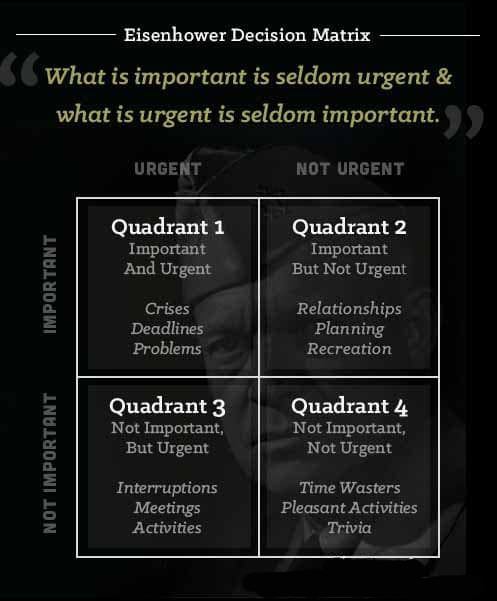
Eisenhower had this incredible ability to sustain his productivity for weeks, months and decades. His most famous productivity strategy is known as “The Eisenhower Box” or “The Eisenhower Matrix”, a simple decision-making tool that you can use right now to empower yourself and make real progress on your life.
The matrix consists of a square divided into four boxes, or quadrants, labeled as follow:
1) Urgent/Important;
2) Not Urgent/Important;
3) Urgent/Not Important, and
4) Not Urgent/Not Important.
“Tasks that are both urgent and important require our immediate attention and also work towards fulfilling our long-term goals and missions in life.”
This is the “Do It Now!” box
“Urgent and Important” tasks typically consist of crises, problems, or deadlines. A few specific examples of Urgent and Important tasks would be:
With a bit of planning and organization, many of these Quadrant 1 tasks can be made more efficient or even eliminated outright. For example, instead of waiting until the last minute to work on your term paper, thus turning it into an urgent task, you could schedule your time so that you will be done with your paper a week in advance. Or, instead of waiting for something in your house to need fixing or fall apart, you can implement and follow a schedule of regular maintenance.
While you will never be able to completely eliminate urgent and important tasks, with a bit of imagination and proactivity you can significantly reduce them by spending more time in Quadrant 2.
Tasks that are “Not Urgent bur Important” are these activities that do not have a pressing deadline, but nonetheless help you achieve your important personal, school, and work goals as well as help you fulfill your overall mission in life.
This is the “Schedule It!” box.
The “Not Urgent but Important” tasks are typically centered around strengthening relationships, planning for the future, and improving yourself.
A few specific examples of Not Urgent but Important Tasks would be:
Always seek to spend most of your time on “Not Urgent but Important” activities. They are the ones that will provide you lasting happiness, fulfillment and success. Unfortunately for many, there are two key challenges that will tend to keep you from investing enough time and energy into these activities:
Because “Not Urgent but Important” activities are not pressing for your attention, you typically keep them forever on the back-burner of your lives and tell yourselves, “I will get to those things “Someday”. You even put off figuring out what is most important in your life and life in general.
But “Someday” will never come.
If you are waiting to do the important thinks until your schedule clears up, trust me when I say that it will never happen, that you are daydreaming. Whatever happens in your life, you will always feel about as busy as you are now, and if anything, life just gets busier as you get older.
To overcome our inherent present-bias that prevents us from focusing on “Not urgent and Important” activities, you must live your lives intentionally and proactively. You cannot run your life in default mode. You have to consciously decide, “I am going to make time for these things”.
“Urgent and Not Important” tasks are activities that require your attention now, but do not help you achieve your goals or fulfill your mission in life. Most “Urgent and Not Important” tasks are interruptions originating from other people and often involve helping them meet their own goals and fulfill their own priorities.
This is the “Delegate Me!” box.
Here are some specific examples of “Urgent and Not Important” activities:
Many people spend most of their time on “Urgent and Not Important” tasks, while thinking they are working on “Urgent and Important” tasks.
While “Urgent and Important” tasks may be important to others, they are not important to you. They’re not necessarily bad, but they need to be balanced with your “Not Urgent but Important” activities. Otherwise, you will end up feeling like you are getting a lot done from day-to-day, while eventually realizing that you’re not actually making any progress in your own long-term goals. This is the perfect recipe for personal frustration and resentment towards others.
The solution to this problem is simple: Become more assertive and start to politely but firmly say “No!” to most requests.
“Not Urgent and Not Important” are these activities that, other than if they serve a specific professional or business purpose, unnecessary. These are the activities that are not helping you achieve or resolve anything. They are neither pressing nor do they help you achieve long-term goals or fulfill your mission in live. They are primarily, simply and utterly, mainly distractions.
This is the “Do Me later!”, the “Do Not Do It!” box.
Specific examples of such mostly useless tasks include:
If we were to conduct a time audit on ourselves, most of us would find that we spend an inordinate amount of time on “Not Urgent and Not Important” activities.
As a pragmatist, I do not think you need to eliminate “Not Urgent and Not Important” activities altogether from your life. After a particularly hectic and busy day, randomly browsing the internet or watching a favorite TV show for a half hour is exactly what my brain needs to decompress.
Instead of aiming to completely rid yourself of “Not Urgent and Not Important” tasks, try to only 5% or less of your waking hours on them.
In our present shock world, the ability to filter the signal from the noise, or distinguish between what is urgent and what is truly important, is an essential skill to develop. When faced with a decision, stop and ask yourself, “Am I doing this because it is important or am I doing it because it is merely urgent?”
As you will spend most of your time working on “Not Urgent but Important tasks”, you will feel a renewed sense of calm, control, and composure in your life. You will feel like you are making real progress. By investing your time in “Not Urgent but Important” planning/organizing activities, you will prevent and eliminate many of the crises and problems of “Urgent and Important” tasks, balance the requests of “Urgent and Not Important” tasks with your own needs, and truly enjoy the veg-outs of “Not Urgent and Not Important” activities, knowing that you have earned the rest. By making “Not Urgent but Important” tasks your top priority, no matter the emergency, annoyance, or deadline you will be hit with, you will have the mental, emotional, and physical wherewithal to respond positively, rather than react defensively.
JMD
Transition & Reputation Management
Office: 613.449.3278
Skype: jmdlive
Web: www.jmdsystemics.com
Follow JMDlive on:
Pinterest, Twitter, Facebook, JMDlive.com, The Futurist Daily News, JMDsystemics.com, SSTM.solutions, Tumblr and Warrior For Common Sense
28 Friday Dec 2018
Posted in Général / General

How to Distinguish Between Urgent and Important Tasks and Make Real Progress in Your Life
“What is important is seldom urgent and what is urgent is seldom important.”
Many spend all their time managing crises.
Their life is basically spent putting out one proverbial fire after another. At the end of the day they feel completely sapped and drained of energy, and yet cannot point to anything they accomplished of real significance. They confuse the urgent with the important.
The Difference Between Urgent and Important
An “Urgent” task is one that requires your immediate attention. These are the tasks that shout “Do It Now!” Urgent tasks put you in a reactive mode, a defensive, negative, hurried, and narrowly-focused mindset.
An “Important” task is something that is to be done that contributes to your long-term mission, values, and goals. While they may sometimes be, typically, important tasks are not urgent. When you focus on important activities you operate in a responsive mode that helps you remain calm, rational, and open to new opportunities.
As a result of all these modern stimulus-producing technologies such as 24-hour News, Twitter, Facebook, social media and text messaging technologies process all information as equally urgent and pressing, you tend to believe that all urgent activities are important. These modern news and social media stimulus-producing technologies constantly assault you with information that only heighten your deeply ingrained mindset that is: to believe that all urgent activities are also important.
As a result, you are experiencing “present shock”, a condition in which “you live in a continuous, always-on ‘Now!!’” and lose your sense of long-term narrative and direction. In such a state, it is easy to lose sight of the distinction between the truly important and the merely urgent and the consequences of this priority-blindness are both personal and societal. In your own lives, you suffer from burnout and stagnation and, on a societal level, we are unable to solve the truly important problems of our time.
The Eisenhower Decision Matrix
Dwight Eisenhower lived one of the most productive lives you can imagine.
Eisenhower was the 34th President of the United States, serving two terms from 1953 to 1961. During his time in office, he launched programs that directly led to the development of the Interstate Highway System, the launch of the internet (DARPA), the exploration of space (NASA), and the peaceful use of alternative energy sources (Atomic Energy Act).
Before becoming president, Eisenhower was a five-star general in the United States Army. He served as the Supreme Commander of the Allied Forces in Europe during World War II, and was responsible for planning and executing invasions of North Africa, France, and Germany. Along the way, he served as President of Columbia University, became the first Supreme Commander of NATO, and somehow found time to pursue hobbies like golfing and oil painting.
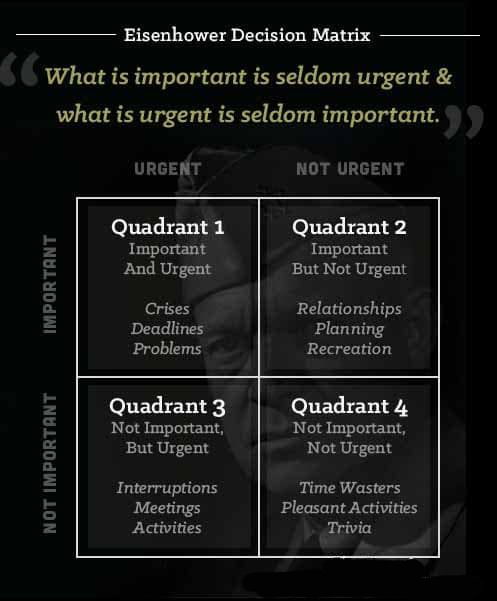
Eisenhower had this incredible ability to sustain his productivity for weeks, months and decades. His most famous productivity strategy is known as “The Eisenhower Box” or “The Eisenhower Matrix”, a simple decision-making tool that you can use right now to empower yourself and make real progress on your life.
The matrix consists of a square divided into four boxes, or quadrants, labeled as follow:
Urgent/Important;
Not Urgent/Important;
Urgent/Not Important, and
Not Urgent/Not Important.
Quadrant 1: “Urgent and Important” Tasks
Tasks that are both urgent and important require our immediate attention and also work towards fulfilling our long-term goals and missions in life.
This is the “Do It Now!” box.
“Urgent and Important” tasks typically consist of crises, problems, or deadlines.
A few specific examples of Urgent and Important tasks would be:
Certain emails such as a job offer, an email for a new business opportunity that requires immediate action, etc.;
A term paper deadline;
A Tax deadline;
A member of your family in an hospital ICU;
Your car engine giving out;
Household chores;
A heart attack and ending up in the hospital;
A call from your kid’s principal saying you need to come in for a meeting about his behavior.
With a bit of planning and organization, many of these Quadrant 1 tasks can be made more efficient or even eliminated outright. For example, instead of waiting until the last minute to work on your term paper, thus turning it into an urgent task, you could schedule your time so that you will be done with your paper a week in advance. Or, instead of waiting for something in your house to need fixing or fall apart, you can implement and follow a schedule of regular maintenance.
While you will never be able to completely eliminate urgent and important tasks, with a bit of imagination and pro-activity you can significantly reduce them by spending more time in Quadrant 2.
Quadrant 2: “Not Urgent but Important” Tasks
Tasks that are “Not Urgent bur Important” are these activities that do not have a pressing deadline, but nonetheless help you achieve your important personal, school, and work goals as well as help you fulfill your overall mission in life.
This is the “Schedule It!” box.
The “Not Urgent but Important” tasks are typically centered around strengthening relationships, planning for the future, and improving yourself.
A few specific examples of Not Urgent but Important Tasks would be:
Weekly planning;
Long-term planning;
Exercising;
Family time;
Taking a class to improve a skill;
Spending time with a rewarding hobby;
Car and home maintenance;
Creating a budget and savings plan.
Always seek to spend most of your time on “Not Urgent but Important” activities. They are the ones that will provide you lasting happiness, fulfillment and success. Unfortunately for many, there are two key challenges that will tend to keep you from investing enough time and energy into these activities:
First: “You don’t know what’s truly important to you.” If you do not have any idea what values and goals matter most to you, you obviously will not know what things you should be spending your time on to reach those aims! Instead, you will latch on to whatever stimuli and to-dos are most urgent.
Second: “Present bias.” For most of us, we are all inclined to focus on whatever is most pressing at the moment. Doing so is our default mode. It is hard to get motivated to do something when there is not a deadline pending over our head. Departing from this fallback position takes willpower and self-discipline. Cultivate these qualities. They hat do not come naturally. Do whatever you have to do to develop this mental toughness and discipline that you may be lacking of.
Because “Not Urgent but Important” activities are not pressing for your attention, you typically keep them forever on the back-burner of your lives and tell yourselves, “I will get to those things “Someday”. You even put off figuring out what is most important in your life and life in general.
But “Someday” will never come.
If you are waiting to do the important thinks until your schedule clears up, trust me when I say that it will never happen, that you are daydreaming. Whatever happens in your life, you will always feel about as busy as you are now, and if anything, life just gets busier as you get older.
To overcome our inherent present-bias that prevents us from focusing on “Not urgent and Important” activities, you must live your lives intentionally and proactively. You cannot run your life in default mode. You have to consciously decide, “I am going to make time for these things”.
Quadrant 3: “Urgent and Not Important” Tasks
“Urgent and Not Important” tasks are activities that require your attention now, but do not help you achieve your goals or fulfill your mission in life.
Most “Urgent and Not Important” tasks are interruptions originating from other people and often involve helping them meet their own goals and fulfill their own priorities.
This is the “Delegate Me!” box.
Here are some specific examples of “Urgent and Not Important” activities:
Most phone calls;
Most text messages;
Most emails, those that are not “Urgent and Important”;
Co-worker who comes by your desk during your prime working time to ask a favor;
Request from a former employee to write a letter of recommendation on his behalf;
Your mom drops in unannounced and wants your help with a chore.
Many people spend most of their time on “Urgent and Not Important” tasks, while thinking they are working on “Urgent and Important” tasks.
While “Urgent and Important” tasks may be important to others, they are not important to you. They’re not necessarily bad, but they need to be balanced with your “Not Urgent but Important” activities. Otherwise, you will end up feeling like you are getting a lot done from day-to-day, while eventually realizing that you’re not actually making any progress in your own long-term goals. This is the perfect recipe for personal frustration and resentment towards others.
The solution to this problem is simple: Become more assertive and start to politely but firmly say “No!” to most requests.
Quadrant 4: “Not Urgent and Not Important” Tasks
“Not Urgent and Not Important” are these activities that, other than if they serve a specific professional or business purpose, unnecessary. These are the activities that are not helping you achieve or resolve anything. They are neither pressing nor do they help you achieve long-term goals or fulfill your mission in live. They are primarily, simply and utterly, mainly distractions.
This is the “Do Me later!”, the “Do Not Do It!” box.
Specific examples of such mostly useless tasks include:
Watching TV;
Mindlessly surfing the web;
Playing video games;
Scrolling through Facebook, Twitter, Instagram;
Gambling;
Shopping sprees.
If we were to conduct a time audit on ourselves, most of us would find that we spend an inordinate amount of time on “Not Urgent and Not Important” activities.
As a pragmatist, I do not think you need to eliminate “Not Urgent and Not Important” activities altogether from your life. After a particularly hectic and busy day, randomly browsing the internet or watching a favorite TV show for a half hour is exactly what my brain needs to decompress.
Instead of aiming to completely rid yourself of “Not Urgent and Not Important” tasks, try to only 5% or less of your waking hours on them.
Be Like Ike Eisenhower:
Spend More Time on Important Tasks
In our present shock world, the ability to filter the signal from the noise, or distinguish between what is urgent and what is truly important, is an essential skill to develop. When faced with a decision, stop and ask yourself, “Am I doing this because it is important or am I doing it because it is merely urgent?”
As you will spend most of your time working on “Not Urgent but Important tasks”, you will feel a renewed sense of calm, control, and composure in your life. You will feel like you are making real progress. By investing your time in “Not Urgent but Important” planning/organizing activities, you will prevent and eliminate many of the crises and problems of “Urgent and Important” tasks, balance the requests of “Urgent and Not Important” tasks with your own needs, and truly enjoy the veg-outs of “Not Urgent and Not Important” activities, knowing that you have earned the rest. By making “Not Urgent but Important” tasks your top priority, no matter the emergency, annoyance, or deadline you will be hit with, you will have the mental, emotional, and physical wherewithal to respond positively, rather than react defensively.
JMD
JMD Systemics
Transition & Reputation Management
Office: 613.449.3278
Skype: jmdlive
Web: www.jmdsystemics.com
J. Michael Dennis is a former attorney, a Trial Scientist, a Crisis & Reputation Management Expert, a Public Affairs & Corporate Communications Specialist, a Warrior for Common Sense and Free Speech.
Follow JMDlive on:
Pinterest, Twitter, Facebook, JMDlive.com, The Futurist Daily News, JMDsystemics.com, SSTM.solutions and Tumblr

You must be logged in to post a comment.