If robots can now dance and perform martial arts, what else can they do?
Unlike AI models or industrial equipment, humanoid robots are highly visible examples of China’s technological leadership that general audiences can see on their phones or televisions.
While China and the US are neck-and-neck on AI, humanoid robots are an area where China can claim to be ahead of the US, particularly in terms of scaling up production
By the end of 2024, China had registered 451,700 smart robotics companies, with a total capital of $932.16bn. Major government projects such as Made in China 2025 and the 14th Five-Year Plan, have made robotics and AI key Beijing priorities.
Morgan Stanley projects that China’s humanoid sales will more than double in 2026; and Elon Musk has said he expects his biggest competitor to be Chinese companies as he pivots Tesla toward a focus on embodied AI and its flagship humanoid Optimus.
“People outside China underestimate China, but China is an ass-kicker next level,” Musk said.
J. Michael Dennis ll.l., ll.m.
Based in Kingston, Ontario, Canada, J. Michael Dennis is a former barrister and solicitor, a Crisis & Reputation Management Expert, a Public Affairs & Corporate Communications Specialist, a Warrior for Common Sense and Free Speech. Today, J. Michael Dennis help executives and professionals understand, evaluate, and responsibly deploy AI without hype, technical overload, or strategic blindness.
For most of the past decade, artificial intelligence was treated as a technical topic: something delegated to innovation teams; IT departments, or external vendors. That assumption is no longer viable. Today, AI confusion itself has become a material enterprise risk, and increasingly one that belongs squarely at the board of directors’ table.
The danger is not simply misuse of AI. It is misunderstanding AI: what it is, what it can do: what it cannot do, and how rapidly its economic and regulatory implications are evolving.
Boards that fail to resolve this confusion are beginning to expose their organizations to strategic, operational, legal, and reputational vulnerabilities simultaneously.
The New Nature of AI Risk
Traditional technology risks were largely implementation risks: cybersecurity breaches; system failures, or cost overruns. AI introduces a different category: cognitive risk at the leadership level.
Executives and directors now face a paradox:
AI capabilities are advancing faster than institutional learning cycles;
Vendors market AI aggressively using inconsistent terminology;
Internal teams often lack a shared definition of “AI adoption.”
As a result, organizations frequently believe they have an AI strategy when they actually possess only disconnected experiments.
This gap between perception and reality is where risk emerges.
Confusion Creates Strategic Misallocation
Many boards are currently making capital allocation decisions under ambiguous assumptions:
Treating automation, analytics, and generative AI as interchangeable;
Overestimating short-term productivity gains;
Underestimating structural workforce changes;
Investing defensively because competitors appear to be moving faster.
Consulting analyses from reputable firms consistently show that the economic impact of AI depends less on model capability and more on organizational redesign. Yet governance conversations often remain tool-focused rather than transformation-focused.
The consequence is predictable: companies spend heavily without achieving measurable competitive advantage.
Vendor Narratives Are Outpacing Governance
Technology providers, including Microsoft, OpenAI, and NVIDIA, are advancing the frontier at extraordinary speed. Their messaging emphasizes opportunity, acceleration, and inevitability.
Boards, however, must operate under fiduciary duty, not technological optimism.
Without internal literacy, directors struggle to ask essential questions:
Are we buying capability or marketing?
Where does proprietary data actually flow?
What operational decisions are being delegated to probabilistic systems?
Who is accountable when AI outputs are wrong?
When governance lags behind adoption, risk accumulates silently.
The Regulatory Exposure Is Real, Even Without New Laws
Many directors assume AI risk will crystallize only once formal AI-specific regulation matures. In reality, existing frameworks already apply:
Privacy law;
Securities disclosure obligations;
Product liability;
Employment law, and fiduciary oversight duties.
If leadership cannot clearly explain how AI systems influence decisions, regulators may interpret that ambiguity as governance failure rather than technological complexity.
In other words, confusion itself can become evidence of inadequate oversight.
Operational Risk: The Illusion of Intelligence
Generative AI systems produce fluent outputs that appear authoritative. This creates a novel enterprise hazard: employees may rely on AI beyond validated use cases.
Common emerging failures include:
Hallucinated analysis entering internal reports;
Confidential data exposure through external tools;
These are not edge cases: they are scaling issues. And scaling issues are governance issues.
Why This Has Reached the Boardroom Now
Three structural shifts have elevated AI from CIO concern to board-level responsibility:
AI now affects revenue models, not just efficiency;
Adoption is employee-led, often occurring before policy exists;
Market expectations have shifted: investors increasingly interpret AI positioning as a proxy for future competitiveness.
Boards are therefore being evaluated not only on performance, but on technological judgment.
The Governance Gap
Most organizations currently sit in one of three unstable positions:
Overconfidence, declaring AI leadership without measurable integration;
Paralysis, delaying action due to uncertainty;
Fragmentation, allowing multiple uncoordinated AI initiatives.
None of these states are sustainable.
Effective oversight requires boards to transition from asking: “Are we using AI?” to asking:
Where does AI change decision authority?
Which risks are amplified by probabilistic systems?
What capabilities must leadership personally understand?
What Boards Must Do Next
AI governance does not require directors to become technologists. It requires structured clarity.
Practical steps include:
Establishing a shared organizational definition of AI;
Creating board-level AI literacy sessions;
Requiring management to map AI systems to business processes;
Introducing AI risk reporting alongside cybersecurity reporting, and Assigning explicit executive accountability for AI outcomes.
The goal is not control over technology: it is control over understanding.
The Core Insight
The defining risk of this moment is not artificial intelligence itself. It is leadership operating under inconsistent mental models while deploying systems that reshape how decisions are made.
Historically, boards governed assets they understood. AI breaks that precedent.
Organizations that resolve AI confusion early will treat it as a strategic capability. Those that do not may discover, too late, that uncertainty at the top cascades into exposure everywhere else.
In 2026, AI literacy is no longer a competitive advantage. It is becoming a fiduciary requirement.
J. Michael Dennis ll.l., ll.m.
Based in Kingston, Ontario, Canada, J. Michael Dennis is a former barrister and solicitor, a Crisis & Reputation Management Expert, a Public Affairs & Corporate Communications Specialist, a Warrior for Common Sense and Free Speech. Today, J. Michael Dennis help executives and professionals understand, evaluate, and responsibly deploy AI without hype, technical overload, or strategic blindness.
Artificial Intelligence has moved from experimental research to systemic infrastructure. It now underpins financial markets, defense systems, healthcare diagnostics, logistics networks, media production, and political communication. As capabilities scale, particularly with frontier foundation models and autonomous systems, the conversation is no longer about whether AI will transform society, but whether its risks can be managed with sufficient foresight and institutional discipline.
This article examines AI risk across technical and societal dimensions, outlines the core ethical tensions, and analyzes emerging governance architectures.
I. The AI Risk Landscape
AI risk is not monolithic. It spans operational, systemic, and potentially existential categories. Precision in classification is essential.
1. Near-Term and Operational Risks
These are already observable and measurable.
a. Bias and Discrimination
Machine learning systems inherit biases embedded in training data. When deployed in credit scoring, hiring, predictive policing, or healthcare triage, these biases can amplify structural inequities. The risk is not malevolent AI: it is automated inequity at scale.
b. Reliability and Hallucination
Large language models (LLMs) produce probabilistic outputs, not verified truths. In high-stakes contexts (medical, legal, financial), fabricated or incorrect outputs can cause harm if uncritically trusted.
c. Privacy and Surveillance
AI dramatically enhances the ability to aggregate, infer, and predict behavior from data. Combined with biometric identification and behavioral analytics, this enables unprecedented surveillance capacities.
d. Cybersecurity and Weaponization
AI lowers the barrier to sophisticated cyberattacks, automated phishing, malware generation, and misinformation campaigns. Dual-use capabilities create asymmetric risk: defensive and offensive capacities scale simultaneously.
2. Systemic and Macroeconomic Risks
a. Labor Market Displacement
Generative AI affects cognitive labor in addition to manual labor. White-collar professions [law, consulting, marketing, design, software development], face productivity shocks. Transition speed may outpace institutional adaptation, creating economic turbulence.
b. Information Integrity
AI-generated content erodes epistemic trust. Deepfakes and synthetic media challenge democratic processes and crisis response systems. When authenticity becomes ambiguous, social cohesion weakens.
c. Power Concentration
Frontier AI development requires massive computational resources and capital investment. This concentrates capability within a small number of corporations and states, raising geopolitical and antitrust concerns.
3. Long-Term and Existential Risk
A subset of researchers argue that sufficiently advanced AI systems could become misaligned with human interests. The alignment problem concerns whether highly capable systems will robustly pursue intended goals under distributional shift.
Key technical concerns include:
Goal misgeneralization
Instrumental convergence (systems pursuing power as a subgoal)
Recursive self-improvement
Loss of human oversight at superhuman capability thresholds
While timelines remain uncertain, the severity of downside scenarios drives precautionary discourse.
II. Ethical Foundations of AI Development
AI ethics is not merely about harm mitigation; it is about normative alignment between technological capability and societal values.
1. Core Ethical Principles
Across major frameworks (OECD, UNESCO, EU AI Act, IEEE), recurring principles include:
Beneficence: AI should advance human well-being.
Non-maleficence: Avoidance of harm.
Autonomy: Respect for human agency and informed consent.
Justice: Fair distribution of benefits and burdens.
Explicability: Transparency and accountability.
The challenge lies in operationalization. Abstract principles must translate into measurable standards and enforceable constraints.
2. Moral Tensions
AI governance involves navigating trade-offs:
Innovation vs. precaution
National competitiveness vs. global safety coordination
Privacy vs. data-driven performance
Open research vs. misuse prevention
Ethics in AI is less about static moral doctrine and more about structured conflict resolution under uncertainty.
III. Governance Models
AI governance operates across three layers: technical safeguards, corporate responsibility, and public regulation.
1. Technical Governance
These mechanisms are embedded directly into model development:
Reinforcement learning from human feedback (RLHF)
Red teaming and adversarial testing
Interpretability research
Constitutional AI approaches
Model capability evaluations before deployment
Technical governance is necessary but insufficient. It relies on the incentives of developers.
2. Corporate Governance
Companies developing AI systems are increasingly expected to implement:
AI ethics boards
Risk classification frameworks
Pre-deployment impact assessments
Transparency reporting
Incident disclosure mechanisms
However, voluntary governance faces credibility limits without external oversight.
3. Regulatory Governance
Governments are moving toward structured regulation.
a. The EU AI Act
Implements a risk-based classification system:
Unacceptable risk (prohibited)
High-risk (strict compliance requirements)
Limited risk (transparency obligations)
Minimal risk (largely unregulated)
b. United States
A sectoral and executive-order-driven approach emphasizing standards, NIST frameworks, and national security review.
c. China
Focuses on algorithmic registration, content controls, and state-aligned objectives.
Global fragmentation poses coordination challenges. AI does not respect borders, yet regulatory authority remains national.
IV. The Alignment and Control Problem
At the frontier, governance intersects with technical alignment research.
Key research domains include:
Mechanistic interpretability
Scalable oversight
AI auditing frameworks
Formal verification
Compute governance (tracking and regulating large training runs)
Some scholars propose international institutions analogous to nuclear non-proliferation frameworks. Others argue for decentralized innovation with strong transparency norms.
The central dilemma: AI capability is advancing faster than institutional adaptation.
V. Strategic Imperatives for Responsible AI
To mitigate risk while preserving upside, five structural imperatives emerge:
Pre-deployment safety testing at scale
Mandatory transparency for frontier model training
International coordination on compute and model evaluations
Investment in alignment research equal to capability research
Public literacy in AI-generated content and epistemic resilience
Risk management must be proactive, not reactive.
VI. Conclusion
AI is not inherently benevolent or malevolent; it is an amplifier. It amplifies productivity, intelligence, creativity, and also bias, misinformation, and power asymmetry. The core challenge is not technological inevitability but governance maturity.
If governance remains fragmented and reactive, systemic instability increases. If governance becomes overly restrictive, innovation may migrate or stagnate.
The path forward requires technical rigor, institutional coordination, and ethical clarity.
Artificial Intelligence is no longer just a tool. It is a structural force shaping the architecture of modern civilization. The decisions made in this decade will determine whether it becomes a stabilizing multiplier, or an accelerant of unmanaged risk.
J. Michael Dennis ll.l., ll.m.
Based in Kingston, Ontario, Canada, J. Michael Dennis is a former barrister and solicitor, a Crisis & Reputation Management Expert, a Public Affairs & Corporate Communications Specialist, a Warrior for Common Sense and Free Speech. Today, J. Michael Dennis help executives and professionals understand, evaluate, and responsibly deploy AI without hype, technical overload, or strategic blindness.
As artificial intelligence moves from experimentation to infrastructure, three disciplines must advance together: realism, governance, and strategic clarity. Without this triad, organizations risk either overhyping AI’s promise or underestimating its systemic consequences.
AI Realism
AI realism begins with an unsentimental view of what current systems can and cannot do. Today’s AI excels at pattern recognition, probabilistic reasoning, and scale, but it does not possess understanding, intent, or accountability. Treating AI as an autonomous decision-maker rather than a powerful tool leads to brittle systems and misplaced trust. Realism demands rigorous evaluation, clear use cases, measurable outcomes, and an honest accounting of failure modes, bias, drift, and operational costs. It also means rejecting both techno-utopianism and fear-driven paralysis.
Governance
Governance provides the guardrails that realism alone cannot. Effective AI governance is not a compliance checkbox; it is a continuous capability. It aligns legal, ethical, technical, and operational oversight across the AI lifecycle, from data sourcing and model development to deployment and monitoring. Good governance defines who is accountable when systems err, how risks are escalated, and when human judgment must override automated outputs. Crucially, governance must be adaptive: static rules cannot keep pace with fast-evolving models, data, and deployment contexts.
Strategic Clarity
Strategic clarity connects AI efforts to organizational purpose. Too many initiatives fail because they start with technology rather than strategy. Strategic clarity answers hard questions upfront: What problems truly matter? Where does AI create durable advantage versus short-term efficiency? Which capabilities should be built in-house, partnered, or outsourced? Clear strategy prevents fragmentation, dozens of pilots with no path to scale, and ensures AI investments reinforce long-term goals rather than distract from them.
Together, these elements form a coherent operating model. Realism grounds expectations, governance manages risk and responsibility, and strategic clarity directs effort and capital. Organizations that integrate all three will not only deploy AI more safely and effectively, they will make better decisions about where AI belongs, how it should be used, and when it should not be used at all. In the AI era, discipline is the real differentiator.
J. Michael Dennis ll.l., ll.m.
Based in Kingston, Ontario, Canada, J. Michael Dennis is a former barrister and solicitor, a Crisis & Reputation Management Expert, a Public Affairs & Corporate Communications Specialist, a Warrior for Common Sense and Free Speech. Today, J. Michael Dennis help executives and professionals understand, evaluate, and responsibly deploy AI without hype, technical overload, or strategic blindness.
There was a time when I admired Donald J. Trump, not for his policies, but for his apparent resilience. He seemed capable of surviving political, legal, and personal crises that would have ended most careers. His refusal to quit, his instinct to fight back, and his sheer stamina gave the impression of strength.
Over time, however, that impression collapsed.
What once looked like resilience increasingly revealed itself as dominance without discipline, aggression without responsibility, and defiance without purpose. Trump’s behavior consistently demonstrates a lack of conscientiousness: disregard for norms, institutions, truth, and even basic consistency. Loyalty is demanded, but rarely reciprocated. Accountability is avoided, not embraced.
Equally troubling is his emotional instability. Criticism is treated as persecution, disagreement as betrayal, and compromise as weakness. This fuels a pattern of grievance, paranoia, and hostility that poisons discourse rather than leading it. Leadership requires emotional regulation; Trump thrives on emotional escalation.
Most damaging of all is his relentless self-centeredness. Everything becomes about personal victory, personal humiliation, or personal revenge. The public good is secondary to the preservation of ego. When antisocial behavior, lying, intimidation, scapegoating, becomes routine rather than exceptional, admiration turns into disillusionment.
I eventually concluded that what I once mistook for strength was merely survival instinct untethered from character. Trump may be educated and experienced, but education without integrity and experience without responsibility amount to little. In the end, I no longer see a fighter worthy of respect, only someone endlessly struggling to protect himself, offering nothing larger than that struggle.
Artificial Intelligence is no longer a speculative technology on the horizon: it is an operational reality reshaping economies, institutions, and human work. While most discussions about AI focus narrowly on tools, models, or short-term productivity gains, the true future of AI is broader and more consequential: AI is evolving from a passive instrument into an active cognitive partner embedded across society. Understanding this transition is essential for leaders, professionals, and policymakers who want to remain relevant in an AI-driven world.
1. From Narrow Automation to Generalized Intelligence
Early AI systems were designed to perform narrowly defined tasks, recognizing images, translating text, or optimizing logistics. The next phase is characterized by generalized capability, systems that can reason across domains, adapt to new contexts, and collaborate with humans in complex problem-solving.
Key shifts include: Multimodal intelligence (text, image, audio, video, and action); Persistent memory and long-term context; Autonomous goal decomposition and planning; Self-improvement through feedback loops. This does not imply human-level consciousness, but it does mean human-comparable competence across many cognitive tasks.
2. AI as a Cognitive Infrastructure
AI is becoming a foundational layer, similar to electricity or the internet, rather than a standalone product. In the future, AI will be: Embedded invisibly in workflows; Integrated into decision-making systems; Continuously adaptive to users and environments. Organizations will not ask “Should we use AI?” but rather “How is intelligence flowing through our systems?” Competitive advantage will come from orchestrating intelligence, not merely adopting tools.
3. The Transformation of Work and Expertise
In the coming years, AI will not simply eliminate jobs; it will redefine expertise. Routine cognitive labor will be increasingly automated, while human value will concentrate in areas where: Judgment under uncertainty matters; Ethical, social, and contextual reasoning is required; Creativity and strategic synthesis are essential; Accountability and trust are critical.
The most valuable professionals will be those who can: Think systemically; Ask high-quality questions; Supervise and align AI systems; Translate between technical, business, and human domains. In short, the future belongs to AI-augmented professionals, not AI-replaced ones.
4. Governance, Trust, and Alignment
As AI systems gain autonomy and scale, governance becomes a central challenge. The future of AI will be shaped as much by policy and ethics as by technology. Critical issues include: Model transparency and explainability; Bias, fairness, and representational harm; Data ownership and privacy; Accountability for AI-driven decisions; Alignment with human values and societal goals.
Nations and organizations that establish trustworthy AI frameworks will gain long-term legitimacy and public acceptance.
5. The Rise of Personal and Collective AI
We are moving toward a world where individuals have persistent personal AI agents, teams collaborate with shared AI copilots and organizations operate with collective intelligence systems.
These systems will learn individual preferences and goals, act as cognitive extensions of the user and coordinate knowledge across groups at scale. This represents a fundamental shift in how humans think, learn, and collaborate.
6. Risks, Limits, and Reality Checks
Despite rapid progress, AI is not magic. The future will include technical limitations and failures, over-reliance and skill atrophy, concentration of power among a few actors and misuse in surveillance, manipulation, and conflict.
Responsible progress requires clear-eyed realism, not blind optimism or reflexive fear.
Choosing the Future of AI
The future of AI is not predetermined. It will be shaped by how organizations deploy it, how governments regulate it, how professionals adapt to it and how society defines acceptable use.
AI’s ultimate impact will depend less on what the technology can do, and more on what we choose to do with it. Those who engage early, thoughtfully, ethically, and strategically, will help define an AI-enabled future that amplifies human potential rather than diminishes it.
J. Michael Dennis ll.l., ll.m.
Based in Kingston, Ontario, Canada, J. Michael Dennis is a former barrister and solicitor, a Crisis & Reputation Management Expert, a Public Affairs & Corporate Communications Specialist, a Warrior for Common Sense and Free Speech. Today, J. Michael Dennis help executives and professionals understand, evaluate, and responsibly deploy AI without hype, technical overload, or strategic blindness.
A Consultant’s Perspective on What Actually Matters
As an AI Consultant, I spend far less time discussing models, benchmarks, or product launches than most people expect. Those details matter, but they are not where the real transformation is happening.
The future of Artificial Intelligence will not be decided by algorithms alone. It will be decided by how organizations, leaders, and institutions choose to integrate intelligence into their decision-making, operations, and culture.
From the field, the signal is clear: AI is moving from a tool you “use” to a system you work with.
1. AI Is Becoming Strategic Infrastructure, Not Software
Most organizations still approach AI as a technology purchase. That mindset is already obsolete. AI is rapidly becoming cognitive infrastructure, a layer that influences: How decisions are made; How work is coordinated; How knowledge flows across the organization; How risks are identified and mitigated.
In the near future, competitive advantage will not come from having access to AI (everyone will), but from how intelligently it is embedded into business processes and governance structures.
This is not an IT problem. It is a leadership problem.
2. The Real Shift: From Automation to Augmentation
The dominant narrative focuses on job displacement. In practice, what I observe is something subtler and more disruptive: the redefinition of expertise.
AI excels at: Pattern recognition; Synthesis at scale; Speed and consistency. Humans remain essential for: Judgment under uncertainty; Contextual and ethical reasoning; Strategic prioritization; Accountability.
The future belongs to professionals who can collaborate with AI systems, supervise them, and translate their outputs into real-world decisions. Organizations that fail to reskill their people around this reality will fall behind, regardless of how advanced their tools appear.
3. Why Most AI Initiatives Fail
From a consulting standpoint, AI failures rarely stem from weak models. They stem from: Poor problem definition; Misaligned incentives; Lack of data governance; Absence of ownership and accountability; Unrealistic expectations driven by hype.
Successful AI adoption requires discipline: Clear use cases tied to measurable outcomes; Human-in-the-loop design; Change management, not just deployment; Continuous evaluation and iteration.
AI is not a one-time implementation. It is an ongoing organizational capability.
4. Trust, Governance, and the Consultant’s Blind Spot
As AI systems gain autonomy, trust becomes the limiting factor.
Leaders increasingly ask: “Can we explain this decision?”; “Who is accountable if this goes wrong?”; “Are we exposing ourselves to legal or reputational risk?”
The future of AI will be constrained, and/or enabled, by governance. Consultants and leaders who ignore this dimension are setting their organizations up for long-term failure.
Responsible AI is not a moral luxury; it is a strategic necessity.
5. The Rise of Personal and Organizational AI Agents
We are entering a phase where AI will be persistent, personalized, and proactive.
In practical terms: Executives will work with AI advisors; Teams will share AI copilots; Organizations will develop collective intelligence systems.
The consultant’s role will evolve accordingly: from recommending tools to architecting intelligence ecosystems aligned with strategy, culture, and values.
6. What Leaders Should Be Doing Now
From my perspective, the organizations that will thrive are already: Treating AI as a board-level topic; Investing in AI literacy across leadership; Designing governance before scaling deployment; Experimenting in controlled, high-impact areas; Focusing on augmentation, not replacement.
Waiting for “mature” AI is a strategic error. Maturity comes from engagement.
Conclusion: AI Will Reward Clarity, Not Hype
The future of AI will not favor the loudest adopters or the most aggressive automators. It will favor those who approach AI with clarity of purpose, discipline of execution, and respect for human judgment.
As an AI Consultant, my role is not to sell technology, it is to help organizations think clearly about intelligence: how it is created, governed, and applied. Those who do this well will not just survive the AI transition. They will shape it.
J. Michael Dennis ll.l., ll.m.
Based in Kingston, Ontario, Canada, J. Michael Dennis is a former barrister and solicitor, a Crisis & Reputation Management Expert, a Public Affairs & Corporate Communications Specialist, a Warrior for Common Sense and Free Speech. Today, J. Michael Dennis help executives and professionals understand, evaluate, and responsibly deploy AI without hype, technical overload, or strategic blindness.
To become a millionaire by the age of 30 may seem like a lofty goal, but it is not impossible. Get ready to learn valuable insights and practical tips that can put you on the path to building wealth and realizing your dreams and become a millionaire before you hit 30!
Set Clear Financial Goals
Setting clear financial goals is the foundation for becoming a millionaire. Start by identifying what you truly want to accomplish financially. Do you want to retire early? Start your own business? Whatever it may be, write it down and make it specific.
Next, break your goals into actionable steps. Break them down into smaller, more manageable tasks that will help you make progress towards your ultimate goal. Creating a timeline for achieving each milestone is crucial for staying on track. Set deadlines for yourself and hold yourself accountable. It is important to be realistic with your timeline, but make sure to push yourself to achieve the milestones in a timely manner.
Develop a Millionaire Mindset
Believing in your ability to become a millionaire is the first step towards achieving it. It is important to have a positive mindset and believe that you have the potential to create wealth. By embracing a growth mindset, you open yourself up to learning and growth opportunities that will help you along your journey.
Embracing failure and learning from it is another key aspect of developing a millionaire mindset. Failure is not the end, but rather a stepping stone towards success. View failures as valuable learning experiences and opportunities for growth. Learn from your mistakes and adjust your strategies as you go along.
Staying focused and persistent is essential. Becoming a millionaire does not happen overnight, and it requires consistent effort and dedication. There will inevitably be challenges and setbacks along the way, but it is important to stay focused on your goals and persist through any obstacles that come your way.
Educate Yourself
Knowledge is power when it comes to wealth creation. Educate yourself on personal finance and wealth-building principles. Read books on personal finance and wealth creation to gain insights from experts in the field.
Taking courses or attending seminars on investing can also be beneficial. These educational opportunities can provide you with the knowledge and skills needed to make informed investment decisions. Stay updated with current market trends by following financial news and reading reputable publications. Being knowledgeable about the market can help you identify potential investment opportunities and make well-informed decisions.
Finding mentors in your field of interest can be invaluable. Seek out individuals who have achieved the level of success you desire and learn from their experiences. They can offer guidance, advice, and support as you navigate your own financial journey. Surrounding yourself with successful individuals can also influence and inspire you to reach for higher levels of success.
Save and Invest Wisely
Creating a budget and sticking to it is fundamental for managing your finances effectively. A budget helps you track your income and expenses, enabling you to identify areas where you can reduce unnecessary spending and save money. It is important to monitor your budget regularly and adjust as needed to ensure you are on track to meet your savings goals.
Minimizing unnecessary expenses is crucial for maximizing your savings potential. Evaluate your expenses and determine if there are any areas where you can cut back. This could include reducing dining out, entertainment expenses, or luxury purchases. By making small sacrifices now, you can allocate more funds towards savings and investment opportunities.
Saving a portion of your income regularly is essential for building wealth. Make it a priority to save a certain percentage of your income each month. Set up automatic transfers to a savings or investment account to ensure consistency in your savings habits. Over time, your savings will accumulate and compound, helping you reach your financial goals faster.
Diversifying your investments is important for managing risk and maximizing returns. Spread your investments across different asset classes, such as stocks, bonds, real estate, and alternative investments. This diversification helps to mitigate risk by reducing the impact of any single investment performing poorly. Consult with a financial advisor to determine the best investment strategy for your specific goals and risk tolerance.
Taking calculated risks is a key component of wealth creation. It is important to assess the potential risks before making investment decisions, but also be willing to take calculated risks when the potential for reward outweighs the potential for loss. Be cautious and do thorough research before making any investment decisions, but also be willing to step out of your comfort zone.
Start a Side Hustle
A side hustle can be a powerful tool for increasing your income and accelerating your path to becoming a millionaire. Identify your skills and interests and explore different income-generating opportunities that align with them. It could be freelancing, starting a small business, or investing in a rental property.
Creating a business plan is essential for starting a successful side hustle. Outline your goals, target market, competitive landscape, and financial projections. A well-thought-out business plan will guide your decision-making process and provide a roadmap for success.
Allocate time and effort to your side hustle. Treat it as a legitimate business and dedicate consistent time and energy towards its growth and success. It may require sacrifices and hard work in the beginning, but the potential for financial rewards can be significant.
Network and Build Connections
Networking and building connections can open doors to new opportunities and accelerate your path to success. Attend industry events and conferences to meet like-minded individuals and potential mentors or business partners. These events provide valuable opportunities for learning, networking, and gaining insights from industry experts.
Joining professional organizations related to your field of interest can also be beneficial. These organizations often offer networking events, educational resources, and access to a community of professionals who can provide support and guidance.
Building a strong online presence is essential in today’s digital age. Create a professional LinkedIn profile and connect with influential individuals in your field. Share valuable content, contribute to online discussions, and actively engage with others in your industry. This online presence can help you establish credibility, build connections, and open opportunities for growth.
Work Hard and Smart
To become a millionaire, it is important to work hard and smart. Set ambitious goals for your career and constantly seek opportunities for growth and advancement. Be proactive in seeking out new challenges and responsibilities that push you to develop new skills and expand your knowledge.
Continuously improving your skills is crucial in staying competitive in today’s ever-evolving job market. Attend workshops, take online courses, and seek out mentors who can help you enhance your skill set. The more valuable and marketable your skills are, the greater your earning potential.
Staying motivated and disciplined is essential for long-term success. It is important to maintain a strong work ethic and remain focused on your goals, even when faced with obstacles or setbacks. Develop effective time management strategies and prioritize your tasks to ensure you are making progress towards your goals.
Learn to Manage Risks
Managing risks is an integral part of wealth creation. Before making investment decisions, it is important to assess potential risks and understand the potential impact on your financial well-being. Conduct thorough research and consult with financial professionals before investing in any particular asset or market.
Diversifying your investment portfolio is a key risk management strategy. By spreading your investments across different asset classes and sectors, you reduce the risk of one investment negatively impacting your overall portfolio. Diversification helps to ensure that the impact of any individual investment’s poor performance is minimized.
Having an emergency fund is important for managing unexpected financial hardships. Aim to have at least three to six months’ worth of living expenses saved in an easily accessible account. This fund serves as a safety net in case of job loss, medical emergencies, or other unforeseen circumstances.
Obtaining appropriate insurance coverage is crucial for managing various risks. Make sure you have insurance policies in place to protect yourself, your assets, and your loved ones. This includes health insurance, life insurance, disability insurance, and property insurance. Consult with an insurance professional to ensure you have adequate coverage based on your specific needs.
Stay Disciplined and Avoid Debt
Living within your means is essential for achieving financial success. It is important to spend less than you earn and avoid excessive debt. When you spend more than you earn, you create a cycle of financial stress and struggle to reach your wealth creation goals.
Avoid unnecessary debt whenever possible. Only take on debt for essential purchases, such as a home or education, and avoid high-interest debt, such as credit card debt. Pay off high-interest debts as soon as possible to minimize the amount of interest you pay over time.
Use credit wisely and responsibly. Establish a good credit history by making timely payments and keeping your credit utilization ratio low. This will enable you to access favorable interest rates and terms when you need to take on debt for important investments, such as purchasing a home or starting a business.
Conclusion
Becoming a millionaire requires commitment, persistence, and a clear plan of action. By setting clear financial goals, cultivating a millionaire mindset, educating yourself, saving and investing wisely, starting a side hustle, networking, and building connections, working hard and smart, managing risks, staying disciplined, and avoiding unnecessary debt, you can pave your way to financial success. Commit to your goals, stay focused and persistent, learn from successful self-made millionaires, and most importantly, believe in your ability to create wealth.
To become a millionaire by the age of 30 may seem like a lofty goal, but it is not impossible. Get ready to learn valuable insights and practical tips that can put you on the path to building wealth and realizing your dreams and become a millionaire before you hit 30!
Set Clear Financial Goals
Setting clear financial goals is the foundation for becoming a millionaire. Start by identifying what you truly want to accomplish financially. Do you want to retire early? Start your own business? Whatever it may be, write it down and make it specific.
Next, break your goals into actionable steps. Break them down into smaller, more manageable tasks that will help you make progress towards your ultimate goal. Creating a timeline for achieving each milestone is crucial for staying on track. Set deadlines for yourself and hold yourself accountable. It is important to be realistic with your timeline, but make sure to push yourself to achieve the milestones in a timely manner.
Develop a Millionaire Mindset
Believing in your ability to become a millionaire is the first step towards achieving it. It is important to have a positive mindset and believe that you have the potential to create wealth. By embracing a growth mindset, you open yourself up to learning and growth opportunities that will help you along your journey.
Embracing failure and learning from it is another key aspect of developing a millionaire mindset. Failure is not the end, but rather a stepping stone towards success. View failures as valuable learning experiences and opportunities for growth. Learn from your mistakes and adjust your strategies as you go along.
Staying focused and persistent is essential. Becoming a millionaire does not happen overnight, and it requires consistent effort and dedication. There will inevitably be challenges and setbacks along the way, but it is important to stay focused on your goals and persist through any obstacles that come your way.
Educate Yourself
Knowledge is power when it comes to wealth creation. Educate yourself on personal finance and wealth-building principles. Read books on personal finance and wealth creation to gain insights from experts in the field.
Taking courses or attending seminars on investing can also be beneficial. These educational opportunities can provide you with the knowledge and skills needed to make informed investment decisions. Stay updated with current market trends by following financial news and reading reputable publications. Being knowledgeable about the market can help you identify potential investment opportunities and make well-informed decisions.
Finding mentors in your field of interest can be invaluable. Seek out individuals who have achieved the level of success you desire and learn from their experiences. They can offer guidance, advice, and support as you navigate your own financial journey. Surrounding yourself with successful individuals can also influence and inspire you to reach for higher levels of success.
Save and Invest Wisely
Creating a budget and sticking to it is fundamental for managing your finances effectively. A budget helps you track your income and expenses, enabling you to identify areas where you can reduce unnecessary spending and save money. It is important to monitor your budget regularly and adjust as needed to ensure you are on track to meet your savings goals.
Minimizing unnecessary expenses is crucial for maximizing your savings potential. Evaluate your expenses and determine if there are any areas where you can cut back. This could include reducing dining out, entertainment expenses, or luxury purchases. By making small sacrifices now, you can allocate more funds towards savings and investment opportunities.
Saving a portion of your income regularly is essential for building wealth. Make it a priority to save a certain percentage of your income each month. Set up automatic transfers to a savings or investment account to ensure consistency in your savings habits. Over time, your savings will accumulate and compound, helping you reach your financial goals faster.
Diversifying your investments is important for managing risk and maximizing returns. Spread your investments across different asset classes, such as stocks, bonds, real estate, and alternative investments. This diversification helps to mitigate risk by reducing the impact of any single investment performing poorly. Consult with a financial advisor to determine the best investment strategy for your specific goals and risk tolerance.
Taking calculated risks is a key component of wealth creation. It is important to assess the potential risks before making investment decisions, but also be willing to take calculated risks when the potential for reward outweighs the potential for loss. Be cautious and do thorough research before making any investment decisions, but also be willing to step out of your comfort zone.
Start a Side Hustle
A side hustle can be a powerful tool for increasing your income and accelerating your path to becoming a millionaire. Identify your skills and interests and explore different income-generating opportunities that align with them. It could be freelancing, starting a small business, or investing in a rental property.
Creating a business plan is essential for starting a successful side hustle. Outline your goals, target market, competitive landscape, and financial projections. A well-thought-out business plan will guide your decision-making process and provide a roadmap for success.
Allocate time and effort to your side hustle. Treat it as a legitimate business and dedicate consistent time and energy towards its growth and success. It may require sacrifices and hard work in the beginning, but the potential for financial rewards can be significant.
Network and Build Connections
Networking and building connections can open doors to new opportunities and accelerate your path to success. Attend industry events and conferences to meet like-minded individuals and potential mentors or business partners. These events provide valuable opportunities for learning, networking, and gaining insights from industry experts.
Joining professional organizations related to your field of interest can also be beneficial. These organizations often offer networking events, educational resources, and access to a community of professionals who can provide support and guidance.
Building a strong online presence is essential in today’s digital age. Create a professional LinkedIn profile and connect with influential individuals in your field. Share valuable content, contribute to online discussions, and actively engage with others in your industry. This online presence can help you establish credibility, build connections, and open opportunities for growth.
Work Hard and Smart
To become a millionaire, it is important to work hard and smart. Set ambitious goals for your career and constantly seek opportunities for growth and advancement. Be proactive in seeking out new challenges and responsibilities that push you to develop new skills and expand your knowledge.
Continuously improving your skills is crucial in staying competitive in today’s ever-evolving job market. Attend workshops, take online courses, and seek out mentors who can help you enhance your skill set. The more valuable and marketable your skills are, the greater your earning potential.
Staying motivated and disciplined is essential for long-term success. It is important to maintain a strong work ethic and remain focused on your goals, even when faced with obstacles or setbacks. Develop effective time management strategies and prioritize your tasks to ensure you are making progress towards your goals.
Learn to Manage Risks
Managing risks is an integral part of wealth creation. Before making investment decisions, it is important to assess potential risks and understand the potential impact on your financial well-being. Conduct thorough research and consult with financial professionals before investing in any particular asset or market.
Diversifying your investment portfolio is a key risk management strategy. By spreading your investments across different asset classes and sectors, you reduce the risk of one investment negatively impacting your overall portfolio. Diversification helps to ensure that the impact of any individual investment’s poor performance is minimized.
Having an emergency fund is important for managing unexpected financial hardships. Aim to have at least three to six months’ worth of living expenses saved in an easily accessible account. This fund serves as a safety net in case of job loss, medical emergencies, or other unforeseen circumstances.
Obtaining appropriate insurance coverage is crucial for managing various risks. Make sure you have insurance policies in place to protect yourself, your assets, and your loved ones. This includes health insurance, life insurance, disability insurance, and property insurance. Consult with an insurance professional to ensure you have adequate coverage based on your specific needs.
Stay Disciplined and Avoid Debt
Living within your means is essential for achieving financial success. It is important to spend less than you earn and avoid excessive debt. When you spend more than you earn, you create a cycle of financial stress and struggle to reach your wealth creation goals.
Avoid unnecessary debt whenever possible. Only take on debt for essential purchases, such as a home or education, and avoid high-interest debt, such as credit card debt. Pay off high-interest debts as soon as possible to minimize the amount of interest you pay over time.
Use credit wisely and responsibly. Establish a good credit history by making timely payments and keeping your credit utilization ratio low. This will enable you to access favorable interest rates and terms when you need to take on debt for important investments, such as purchasing a home or starting a business.
Conclusion
Becoming a millionaire requires commitment, persistence, and a clear plan of action. By setting clear financial goals, cultivating a millionaire mindset, educating yourself, saving and investing wisely, starting a side hustle, networking, and building connections, working hard and smart, managing risks, staying disciplined, and avoiding unnecessary debt, you can pave your way to financial success. Commit to your goals, stay focused and persistent, learn from successful self-made millionaires, and most importantly, believe in your ability to create wealth.
Generative AI has been seen by some as a sort of magical tool that is able to create unique images, voices, and videos with minimal effort. But it has been extremely controversial for creative professionals. In these early days of the technology, some less-than-honest creators have been using it as a quick shortcut that used AI-generated imagery. AI-generated images often appear high quality at first glance, but contain inconsistencies in areas including hands, fingers, or background details. Once your eye is trained to spot these flaws, they cannot be unseen.
AI can be very positive or very negative, very constructive, or very destructive. AI is a Language Learning Machine [LLM]. Feed it with falsehoods and immoral or illegal information, you will end up with a vey evil machine. Feed it with wisdom and absolute truth, you will end up with a very helpful, powerful, and constructive assistant.
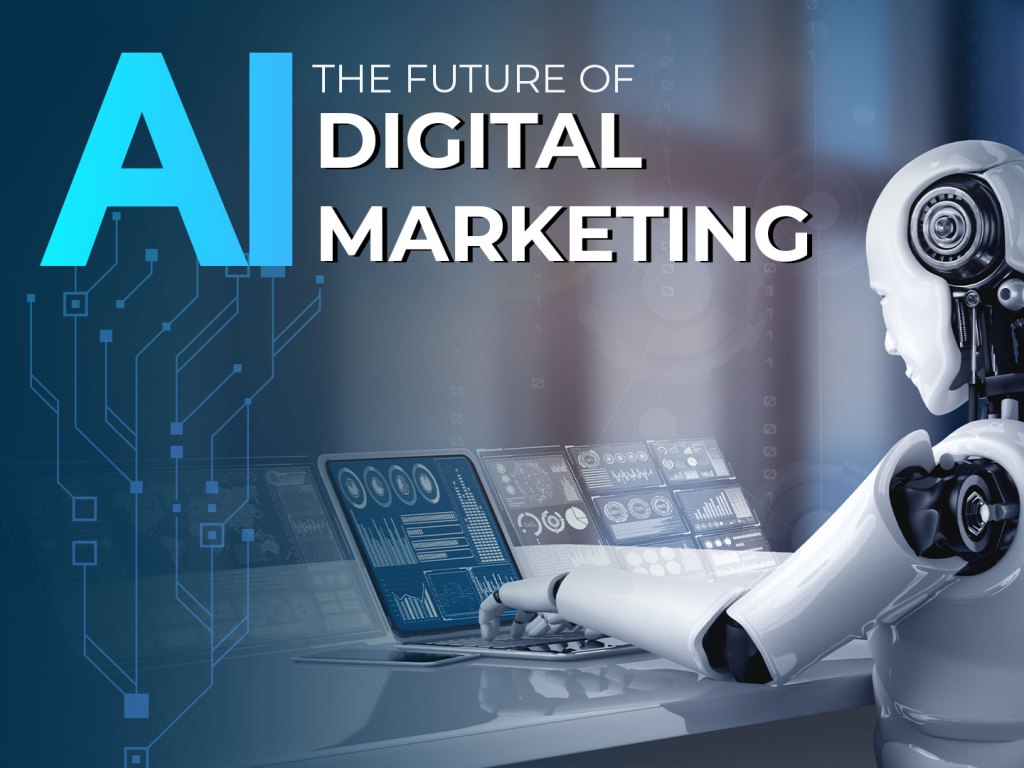
I created my own AI assistant, a clone of myself fed with wisdom, veracity, and exactness. Here is how to get started in using AI to look at data and engagement, helping harness creative marketing potential.
In the face of macro headwinds, many marketing teams have shifted their focus towards efficiency and return on investment (ROI), inadvertently relegating creativity to the backseat. This efficiency-driven approach, while necessary, often results in marketers spending a significant amount of time on routine tasks, leaving less room for creative experimentation. On top of that, marketers may lack the knowledge or access to innovative tools and technologies that can foster creativity. This dynamic presents a unique challenge for marketing teams striving to balance efficiency with creative innovation.
Artificial Intelligence (AI) presents a promising solution to this productivity paradox. Furthermore, AI can provide a canvas for experimentation, sparking creativity by offering new ways to engage audiences and personalize content. And many marketers seem eager to embrace these opportunities. Marketers clearly recognize the potential, but the reality is many marketers and consumers are still learning about AI, including how to put it into practice. The complexity of AI technologies coupled with a lack of knowledge about how to effectively use them can be a major barrier to reaping its benefits. Overcoming these obstacles is crucial for marketers to fully harness the potential of AI in fostering creativity while maintaining efficiency.
So, what can marketing leaders do to set their teams up in 2024 for success?
A staggering 98% of surveyed marketers identified issues holding them back from being creative and strategic. The obstacles are not singular, but rather a combination of four parallel challenges, and the focus areas are not all too surprising. These include an overemphasis on KPIs that stifles creativity, too much time spent on routine tasks, a lack of technology to execute creative ideas, and difficulty demonstrating the ROI of creativity. Helping marketing teams execute faster and more effectively is a powerful first step to help them move past these challenges and get back to the work they’re passionate about.
AI’s Role in Achieving Data Agility and Higher Productivity
With more time for strategic work, marketers can tackle challenges associated with breaking down silos across teams to leverage data more effectively and drive business outcomes. Despite the vast amounts of data generated daily, only 24% of brands are currently mapping customer behavior and sentiment, and a mere 6% are applying customer insights to their product and brand approach.
This underutilization of data is a missed opportunity, especially considering AI’s capacity to process, analyze, and draw meaningful insights from complex data sets, enabling it to predict customer behavior, preferences, and trends. AI can be the bridge that by enabling businesses to make informed strategic decisions that significantly impact the customer experience.
By leveraging AI and breaking down silos between teams, brands can achieve higher productivity to gain a competitive and creative edge. As businesses move beyond vanity metrics and aim to deepen first-party relationships with customers, it is crucial that they can quickly act on data to create personalized experiences in-the-moment and at scale. And doing this can really pay off.
Marketers Need Cross-Functional Allies
For teams to be strategic, creative, and maximize their data usage for customer engagement they need to work more cross-functionally. Unlocking the full potential of AI necessitates a deeper collaboration with teams responsible for data management, including those handling data warehouses, business intelligence applications, CRMs, and other data-rich platforms. The siloed approach of the past is no longer effective in a world where customer touchpoints require stronger alignment and partnership between teams that manage data to power experiences across various channels. This type of collaboration requires a shift in mindset, breaking down departmental barriers, and encouraging open communication, especially as execution moves faster with AI.
At JMD Live ONLINE BUSINESS CONSULTING, we use AI not only to help our customers craft creative, personalized experiences, but we also experiment with AI in our own marketing to save valuable time and resources in customer engagement, while increasing our strategic cross-functional collaboration and creativity in social and digital engagement.
AI is a transformative force that is reshaping marketing. The challenges marketers face today, from the pressure to deliver ROI, the time-consuming routine tasks, to the underutilization of data, are not insurmountable. However, the journey to fully realize the benefits of AI requires not just the adoption of technology, but also a shift in mindset, a commitment to continuous learning, and a culture of cross-functional collaboration. Only then can we fully unlock the creative potential of AI.














 J. Michael Dennis ll.l., ll.m. Live
You must be logged in to post a comment.