
• HOME PAGE
  • ABOUT JMD
  • CONTACT JMD
  • ONLINE VIRTUAL SERVICES
  • Publications

J. Michael Dennis ll.l., ll.m. Live

~ ~ JMD Live Online Business Consulting ~ a division of King Global Earth and Environmental Sciences Corporation

J. Michael Dennis ll.l., ll.m.  Live

Tag Archives: ai

From Tools to Partners, The Future of Artificial Intelligence

11 Wednesday Feb 2026

Posted by JMD Live Online Business Consulting in General

≈ Leave a comment

Tags

ai, Artificial Intelligence, chatgpt, Philosophy, Technology

Artificial Intelligence is no longer a speculative technology on the horizon: it is an operational reality reshaping economies, institutions, and human work. While most discussions about AI focus narrowly on tools, models, or short-term productivity gains, the true future of AI is broader and more consequential: AI is evolving from a passive instrument into an active cognitive partner embedded across society. Understanding this transition is essential for leaders, professionals, and policymakers who want to remain relevant in an AI-driven world.

1. From Narrow Automation to Generalized Intelligence

Early AI systems were designed to perform narrowly defined tasks, recognizing images, translating text, or optimizing logistics. The next phase is characterized by generalized capability, systems that can reason across domains, adapt to new contexts, and collaborate with humans in complex problem-solving.

Key shifts include: Multimodal intelligence (text, image, audio, video, and action); Persistent memory and long-term context; Autonomous goal decomposition and planning; Self-improvement through feedback loops. This does not imply human-level consciousness, but it does mean human-comparable competence across many cognitive tasks.

2. AI as a Cognitive Infrastructure

AI is becoming a foundational layer, similar to electricity or the internet, rather than a standalone product. In the future, AI will be: Embedded invisibly in workflows; Integrated into decision-making systems; Continuously adaptive to users and environments. Organizations will not ask “Should we use AI?” but rather “How is intelligence flowing through our systems?” Competitive advantage will come from orchestrating intelligence, not merely adopting tools.

3. The Transformation of Work and Expertise

In the coming years, AI will not simply eliminate jobs; it will redefine expertise. Routine cognitive labor will be increasingly automated, while human value will concentrate in areas where: Judgment under uncertainty matters; Ethical, social, and contextual reasoning is required; Creativity and strategic synthesis are essential; Accountability and trust are critical.

The most valuable professionals will be those who can: Think systemically; Ask high-quality questions; Supervise and align AI systems; Translate between technical, business, and human domains. In short, the future belongs to AI-augmented professionals, not AI-replaced ones.

4. Governance, Trust, and Alignment

As AI systems gain autonomy and scale, governance becomes a central challenge. The future of AI will be shaped as much by policy and ethics as by technology. Critical issues include: Model transparency and explainability; Bias, fairness, and representational harm; Data ownership and privacy; Accountability for AI-driven decisions; Alignment with human values and societal goals.

Nations and organizations that establish trustworthy AI frameworks will gain long-term legitimacy and public acceptance.

5. The Rise of Personal and Collective AI

We are moving toward a world where individuals have persistent personal AI agents, teams collaborate with shared AI copilots and organizations operate with collective intelligence systems.

These systems will learn individual preferences and goals, act as cognitive extensions of the user and coordinate knowledge across groups at scale. This represents a fundamental shift in how humans think, learn, and collaborate.

6. Risks, Limits, and Reality Checks

Despite rapid progress, AI is not magic. The future will include technical limitations and failures, over-reliance and skill atrophy, concentration of power among a few actors and misuse in surveillance, manipulation, and conflict.

Responsible progress requires clear-eyed realism, not blind optimism or reflexive fear.

Choosing the Future of AI

The future of AI is not predetermined. It will be shaped by how organizations deploy it, how governments regulate it, how professionals adapt to it and how society defines acceptable use.

AI’s ultimate impact will depend less on what the technology can do, and more on what we choose to do with it. Those who engage early, thoughtfully, ethically, and strategically, will help define an AI-enabled future that amplifies human potential rather than diminishes it.

J. Michael Dennis ll.l., ll.m.

Based in Kingston, Ontario, Canada, J. Michael Dennis is a former barrister and solicitor, a Crisis & Reputation Management Expert, a Public Affairs & Corporate Communications Specialist, a Warrior for Common Sense and Free Speech. Today, J. Michael Dennis help executives and professionals understand, evaluate, and responsibly deploy AI without hype, technical overload, or strategic blindness.

Contact

jmdlive@jmichaeldennis.live

Share this:

  • Share on X (Opens in new window) X
  • Share on Facebook (Opens in new window) Facebook
Like Loading...

The Future of AI: A Consultant’s Perspective

11 Wednesday Feb 2026

Posted by JMD Live Online Business Consulting in General

≈ Leave a comment

Tags

ai, Artificial Intelligence, Business, chatgpt, Technology

A Consultant’s Perspective on What Actually Matters

As an AI Consultant, I spend far less time discussing models, benchmarks, or product launches than most people expect. Those details matter, but they are not where the real transformation is happening.

The future of Artificial Intelligence will not be decided by algorithms alone. It will be decided by how organizations, leaders, and institutions choose to integrate intelligence into their decision-making, operations, and culture.

From the field, the signal is clear: AI is moving from a tool you “use” to a system you work with.

1. AI Is Becoming Strategic Infrastructure, Not Software

Most organizations still approach AI as a technology purchase. That mindset is already obsolete. AI is rapidly becoming cognitive infrastructure, a layer that influences: How decisions are made; How work is coordinated; How knowledge flows across the organization; How risks are identified and mitigated.

In the near future, competitive advantage will not come from having access to AI (everyone will), but from how intelligently it is embedded into business processes and governance structures.

This is not an IT problem. It is a leadership problem.

2. The Real Shift: From Automation to Augmentation

The dominant narrative focuses on job displacement. In practice, what I observe is something subtler and more disruptive: the redefinition of expertise.

AI excels at: Pattern recognition; Synthesis at scale; Speed and consistency. Humans remain essential for: Judgment under uncertainty; Contextual and ethical reasoning; Strategic prioritization; Accountability.

The future belongs to professionals who can collaborate with AI systems, supervise them, and translate their outputs into real-world decisions. Organizations that fail to reskill their people around this reality will fall behind, regardless of how advanced their tools appear.

3. Why Most AI Initiatives Fail

From a consulting standpoint, AI failures rarely stem from weak models. They stem from: Poor problem definition; Misaligned incentives; Lack of data governance; Absence of ownership and accountability; Unrealistic expectations driven by hype.

Successful AI adoption requires discipline: Clear use cases tied to measurable outcomes; Human-in-the-loop design; Change management, not just deployment; Continuous evaluation and iteration.

AI is not a one-time implementation. It is an ongoing organizational capability.

4. Trust, Governance, and the Consultant’s Blind Spot

As AI systems gain autonomy, trust becomes the limiting factor.

Leaders increasingly ask: “Can we explain this decision?”; “Who is accountable if this goes wrong?”; “Are we exposing ourselves to legal or reputational risk?”

The future of AI will be constrained, and/or enabled, by governance. Consultants and leaders who ignore this dimension are setting their organizations up for long-term failure.

Responsible AI is not a moral luxury; it is a strategic necessity.

5. The Rise of Personal and Organizational AI Agents

We are entering a phase where AI will be persistent, personalized, and proactive.

In practical terms: Executives will work with AI advisors; Teams will share AI copilots; Organizations will develop collective intelligence systems.

The consultant’s role will evolve accordingly: from recommending tools to architecting intelligence ecosystems aligned with strategy, culture, and values.

6. What Leaders Should Be Doing Now

From my perspective, the organizations that will thrive are already: Treating AI as a board-level topic; Investing in AI literacy across leadership; Designing governance before scaling deployment; Experimenting in controlled, high-impact areas; Focusing on augmentation, not replacement.

Waiting for “mature” AI is a strategic error. Maturity comes from engagement.

Conclusion: AI Will Reward Clarity, Not Hype

The future of AI will not favor the loudest adopters or the most aggressive automators. It will favor those who approach AI with clarity of purpose, discipline of execution, and respect for human judgment.

As an AI Consultant, my role is not to sell technology, it is to help organizations think clearly about intelligence: how it is created, governed, and applied. Those who do this well will not just survive the AI transition. They will shape it.

J. Michael Dennis ll.l., ll.m.

Based in Kingston, Ontario, Canada, J. Michael Dennis is a former barrister and solicitor, a Crisis & Reputation Management Expert, a Public Affairs & Corporate Communications Specialist, a Warrior for Common Sense and Free Speech. Today, J. Michael Dennis help executives and professionals understand, evaluate, and responsibly deploy AI without hype, technical overload, or strategic blindness.

Contact

jmdlive@jmichaeldennis.live

Share this:

  • Share on X (Opens in new window) X
  • Share on Facebook (Opens in new window) Facebook
Like Loading...

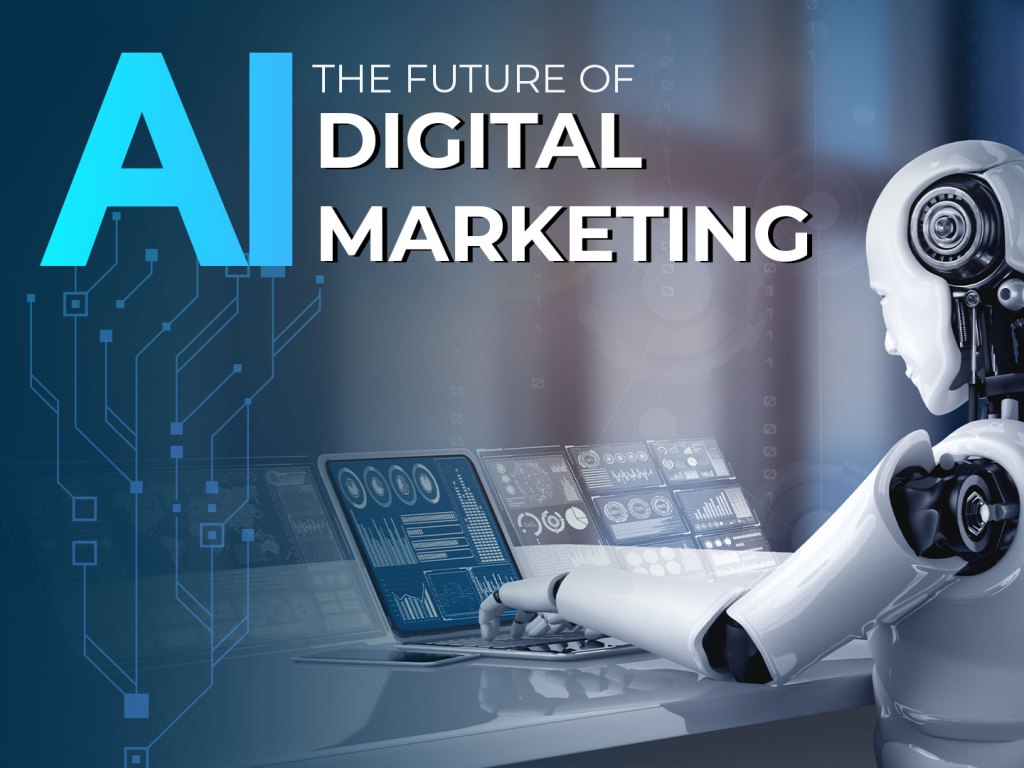
The Future of Artificial Intelligence & Digital Marketing

03 Wednesday Apr 2024

Posted by JMD Live Online Business Consulting in Branding and Marketing

≈ Leave a comment

Tags

ai, Artificial Intelligence, digital-marketing, Marketing, Technology

Generative AI has been seen by some as a sort of magical tool that is able to create unique images, voices, and videos with minimal effort. But it has been extremely controversial for creative professionals. In these early days of the technology, some less-than-honest creators have been using it as a quick shortcut that used AI-generated imagery. AI-generated images often appear high quality at first glance, but contain inconsistencies in areas including hands, fingers, or background details. Once your eye is trained to spot these flaws, they cannot be unseen.

AI can be very positive or very negative, very constructive, or very destructive. AI is a Language Learning Machine [LLM]. Feed it with falsehoods and immoral or illegal information, you will end up with a vey evil machine. Feed it with wisdom and absolute truth, you will end up with a very helpful, powerful, and constructive assistant.

I created my own AI assistant, a clone of myself fed with wisdom, veracity, and exactness. Here is how to get started in using AI to look at data and engagement, helping harness creative marketing potential.

In the face of macro headwinds, many marketing teams have shifted their focus towards efficiency and return on investment (ROI), inadvertently relegating creativity to the backseat. This efficiency-driven approach, while necessary, often results in marketers spending a significant amount of time on routine tasks, leaving less room for creative experimentation. On top of that, marketers may lack the knowledge or access to innovative tools and technologies that can foster creativity. This dynamic presents a unique challenge for marketing teams striving to balance efficiency with creative innovation.

Artificial Intelligence (AI) presents a promising solution to this productivity paradox. Furthermore, AI can provide a canvas for experimentation, sparking creativity by offering new ways to engage audiences and personalize content. And many marketers seem eager to embrace these opportunities. Marketers clearly recognize the potential, but the reality is many marketers and consumers are still learning about AI, including how to put it into practice. The complexity of AI technologies coupled with a lack of knowledge about how to effectively use them can be a major barrier to reaping its benefits. Overcoming these obstacles is crucial for marketers to fully harness the potential of AI in fostering creativity while maintaining efficiency.

So, what can marketing leaders do to set their teams up in 2024 for success?

A staggering 98% of surveyed marketers identified issues holding them back from being creative and strategic. The obstacles are not singular, but rather a combination of four parallel challenges, and the focus areas are not all too surprising. These include an overemphasis on KPIs that stifles creativity, too much time spent on routine tasks, a lack of technology to execute creative ideas, and difficulty demonstrating the ROI of creativity. Helping marketing teams execute faster and more effectively is a powerful first step to help them move past these challenges and get back to the work they’re passionate about.

AI’s Role in Achieving Data Agility and Higher Productivity

With more time for strategic work, marketers can tackle challenges associated with breaking down silos across teams to leverage data more effectively and drive business outcomes. Despite the vast amounts of data generated daily, only 24% of brands are currently mapping customer behavior and sentiment, and a mere 6% are applying customer insights to their product and brand approach.

This underutilization of data is a missed opportunity, especially considering AI’s capacity to process, analyze, and draw meaningful insights from complex data sets, enabling it to predict customer behavior, preferences, and trends. AI can be the bridge that by enabling businesses to make informed strategic decisions that significantly impact the customer experience.

By leveraging AI and breaking down silos between teams, brands can achieve higher productivity to gain a competitive and creative edge. As businesses move beyond vanity metrics and aim to deepen first-party relationships with customers, it is crucial that they can quickly act on data to create personalized experiences in-the-moment and at scale. And doing this can really pay off.

Marketers Need Cross-Functional Allies

For teams to be strategic, creative, and maximize their data usage for customer engagement they need to work more cross-functionally. Unlocking the full potential of AI necessitates a deeper collaboration with teams responsible for data management, including those handling data warehouses, business intelligence applications, CRMs, and other data-rich platforms. The siloed approach of the past is no longer effective in a world where customer touchpoints require stronger alignment and partnership between teams that manage data to power experiences across various channels. This type of collaboration requires a shift in mindset, breaking down departmental barriers, and encouraging open communication, especially as execution moves faster with AI.

At JMD Live ONLINE BUSINESS CONSULTING, we use AI not only to help our customers craft creative, personalized experiences, but we also experiment with AI in our own marketing to save valuable time and resources in customer engagement, while increasing our strategic cross-functional collaboration and creativity in social and digital engagement.

AI is a transformative force that is reshaping marketing. The challenges marketers face today, from the pressure to deliver ROI, the time-consuming routine tasks, to the underutilization of data, are not insurmountable. However, the journey to fully realize the benefits of AI requires not just the adoption of technology, but also a shift in mindset, a commitment to continuous learning, and a culture of cross-functional collaboration. Only then can we fully unlock the creative potential of AI.

Michel Ouellette JMD, ll.l., ll.m.

JMD Live Online Subscription link

J. Michael Dennis, ll.l., ll.m.

Business & Corporate Strategist

Systemic Strategic Planning

Quality Assurance, Occupational Health & Safety, Environmental Protection, Regulatory Compliance, Crisis & Reputation Management

Skype: jmdlive

Email: jmdlive@jmichaeldennis.live

Web: https://www.jmichaeldennis.live

Phone: 24/7 Emergency Access

Available to our clients/business partners

Share this:

  • Share on X (Opens in new window) X
  • Share on Facebook (Opens in new window) Facebook
Like Loading...

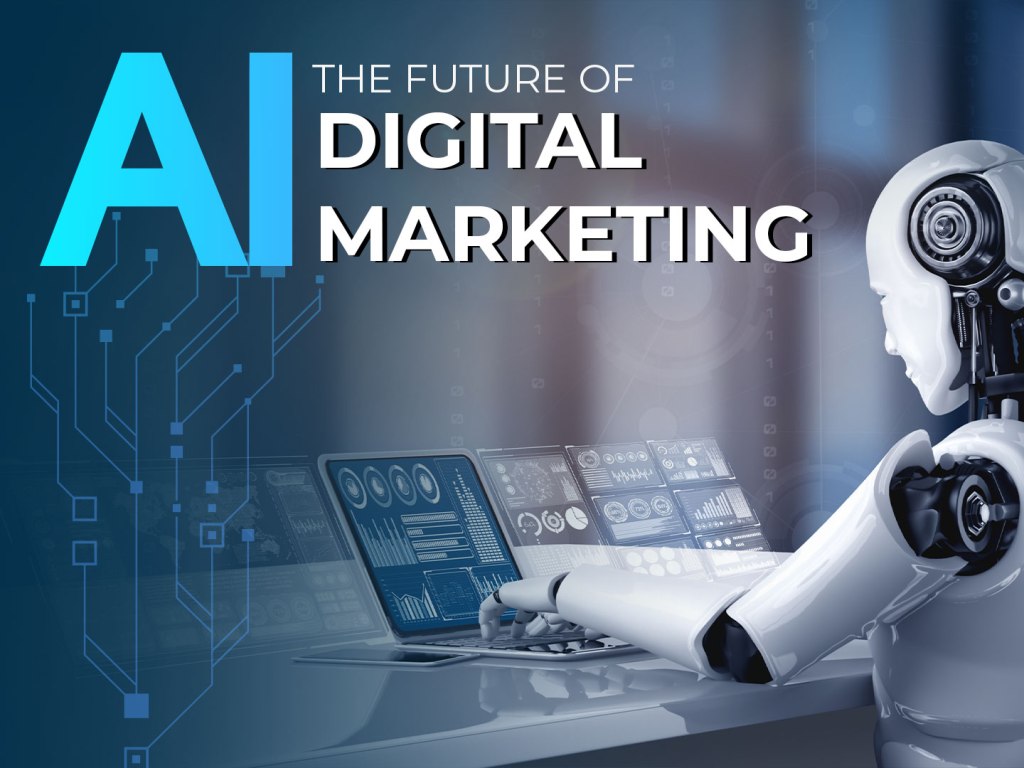
The Future of Artificial Intelligence & Digital Marketing

03 Wednesday Apr 2024

Posted by JMD Live Online Business Consulting in Artificial Intelligence, Branding and Marketing

≈ Leave a comment

Tags

ai, Artificial Intelligence, digital-marketing, Marketing, Technology

Generative AI has been seen by some as a sort of magical tool that is able to create unique images, voices, and videos with minimal effort. But it has been extremely controversial for creative professionals. In these early days of the technology, some less-than-honest creators have been using it as a quick shortcut that used AI-generated imagery. AI-generated images often appear high quality at first glance, but contain inconsistencies in areas including hands, fingers, or background details. Once your eye is trained to spot these flaws, they cannot be unseen.

AI can be very positive or very negative, very constructive, or very destructive. AI is a Language Learning Machine [LLM]. Feed it with falsehoods and immoral or illegal information, you will end up with a vey evil machine. Feed it with wisdom and absolute truth, you will end up with a very helpful, powerful, and constructive assistant.

I created my own AI assistant, a clone of myself fed with wisdom, veracity, and exactness. Here is how to get started in using AI to look at data and engagement, helping harness creative marketing potential.

In the face of macro headwinds, many marketing teams have shifted their focus towards efficiency and return on investment (ROI), inadvertently relegating creativity to the backseat. This efficiency-driven approach, while necessary, often results in marketers spending a significant amount of time on routine tasks, leaving less room for creative experimentation. On top of that, marketers may lack the knowledge or access to innovative tools and technologies that can foster creativity. This dynamic presents a unique challenge for marketing teams striving to balance efficiency with creative innovation.

Artificial Intelligence (AI) presents a promising solution to this productivity paradox. Furthermore, AI can provide a canvas for experimentation, sparking creativity by offering new ways to engage audiences and personalize content. And many marketers seem eager to embrace these opportunities. Marketers clearly recognize the potential, but the reality is many marketers and consumers are still learning about AI, including how to put it into practice. The complexity of AI technologies coupled with a lack of knowledge about how to effectively use them can be a major barrier to reaping its benefits. Overcoming these obstacles is crucial for marketers to fully harness the potential of AI in fostering creativity while maintaining efficiency.

So, what can marketing leaders do to set their teams up in 2024 for success?

A staggering 98% of surveyed marketers identified issues holding them back from being creative and strategic. The obstacles are not singular, but rather a combination of four parallel challenges, and the focus areas are not all too surprising. These include an overemphasis on KPIs that stifles creativity, too much time spent on routine tasks, a lack of technology to execute creative ideas, and difficulty demonstrating the ROI of creativity. Helping marketing teams execute faster and more effectively is a powerful first step to help them move past these challenges and get back to the work they’re passionate about.

AI’s Role in Achieving Data Agility and Higher Productivity

With more time for strategic work, marketers can tackle challenges associated with breaking down silos across teams to leverage data more effectively and drive business outcomes. Despite the vast amounts of data generated daily, only 24% of brands are currently mapping customer behavior and sentiment, and a mere 6% are applying customer insights to their product and brand approach.

This underutilization of data is a missed opportunity, especially considering AI’s capacity to process, analyze, and draw meaningful insights from complex data sets, enabling it to predict customer behavior, preferences, and trends. AI can be the bridge that by enabling businesses to make informed strategic decisions that significantly impact the customer experience.

By leveraging AI and breaking down silos between teams, brands can achieve higher productivity to gain a competitive and creative edge. As businesses move beyond vanity metrics and aim to deepen first-party relationships with customers, it is crucial that they can quickly act on data to create personalized experiences in-the-moment and at scale. And doing this can really pay off.

Marketers Need Cross-Functional Allies

For teams to be strategic, creative, and maximize their data usage for customer engagement they need to work more cross-functionally. Unlocking the full potential of AI necessitates a deeper collaboration with teams responsible for data management, including those handling data warehouses, business intelligence applications, CRMs, and other data-rich platforms. The siloed approach of the past is no longer effective in a world where customer touchpoints require stronger alignment and partnership between teams that manage data to power experiences across various channels. This type of collaboration requires a shift in mindset, breaking down departmental barriers, and encouraging open communication, especially as execution moves faster with AI.

At JMD Live ONLINE BUSINESS CONSULTING, we use AI not only to help our customers craft creative, personalized experiences, but we also experiment with AI in our own marketing to save valuable time and resources in customer engagement, while increasing our strategic cross-functional collaboration and creativity in social and digital engagement.

AI is a transformative force that is reshaping marketing. The challenges marketers face today, from the pressure to deliver ROI, the time-consuming routine tasks, to the underutilization of data, are not insurmountable. However, the journey to fully realize the benefits of AI requires not just the adoption of technology, but also a shift in mindset, a commitment to continuous learning, and a culture of cross-functional collaboration. Only then can we fully unlock the creative potential of AI.

Michel Ouellette JMD, ll.l., ll.m.

JMD Live Online Subscription link

J. Michael Dennis, ll.l., ll.m.

Business & Corporate Strategist

Systemic Strategic Planning

Quality Assurance, Occupational Health & Safety, Environmental Protection, Regulatory Compliance, Crisis & Reputation Management

Skype: jmdlive

Email: jmdlive@jmichaeldennis.live

Web: https://www.jmichaeldennis.live

Phone: 24/7 Emergency Access Available to our clients/business partners

Share this:

  • Share on X (Opens in new window) X
  • Share on Facebook (Opens in new window) Facebook
Like Loading...

Embracing AI

02 Tuesday Apr 2024

Posted by JMD Live Online Business Consulting in General

≈ Leave a comment

Tags

ai, Artificial Intelligence, chatgpt, machine-learning, Technology

“You may not know what is coming down the pike, the article posited, but if you are wearing the right clothes and sporting the right hairstyle when the acquiring company shows up, you could stand out and survive.”

The fact is, despite the fear and hype, generative AI remains an enigma.

A recent study reveals that 63% of leaders feel that AI must play a significant role in their business but 91% do not yet know how. At the same time, there is a palpable sense of urgency: over half of C-suite executives believe that their business will be dead by 2030 if they do not embrace AI. Uncertainty and speed are scary bedfellows: 79% of my readers and followers do not trust corporations to make responsible choices about implementing AI.

Most experts believe that AI will support, not replace, human performance. But people who use AI will likely replace those who do not. You have a choice. You can ignore AI until you have a better sense of how it will affect your life. Or you can be proactive. There has never been a better time to lean on your growth mindset, to become an avid student of this vast and fast technology. Here are five ways to build the skills you need to survive.

Get Ahead Of The Learning Curve

The jargon around AI is like a new language. Start by learning as much as you can. Knowledge is power, and with a little work, you can flex yours.

Beyond just learning how AI works, explore where it works or does not. AI has promise, but it is not without pitfalls. For example, many companies are using hiring algorithms to surface talent and missing good people because their algorithms are too narrow and are inundated with resume when their algorithms are too broad. Understand how companies are using AI well and where they are stumbling.

Explore the philosophical and moral quandaries that underlie AI’s potential for good and bad. Embracing the rabbit hole means exploring at every turn. It is amazing how proficient you can become when you let your curiosity take the reins.

Experiment A Lot

Adopting an experimental mindset is the best way to gain in-the-trenches experience. Start with a non-proprietary work project. Feed it to a large language model like ChatGPT and ask it what it would add. Prompt it to rephrase your work or to recast it for someone without expertise. Because you are experimenting in a field you already know, you will quickly gauge the value of its inputs. It will also encourage you to see your own work from different angles.

Experimenting with this technology does not have to mean more work. You can play with AI, write your memoir in the style of your favorite author, animate your doodles or your children’s artwork, use AI to turn a still picture into an avatar that talks to you, chat with historical figures. The AI-driven experimental possibilities are endless.

Do not Accept AI At Face Value

Large language models, with their very human-like communications, can feel misleadingly when they produce data-rich answers in record time. But they can hallucinate, make up responses where their training data is lacking based on plausible but incorrect logic. And AI algorithms have been known to rely on shortcut learning, causing false correlations, amplifying discrimination, and producing unreliable results. Do not accept AI’s outputs at face value. Challenge assumptions and triangulate with other research.

In my first foray with AI, I sought research-based insights, together with the relevant sources. Impressed by the outcomes, I looked up the sources, only to find that the authors and the journals were real, but the papers did not exist. Treat AI like a first-year intern: “Eager To Please But Far From Perfect”.

Get Really Good At Asking Questions

New technologies cultivate new jobs. And AI is proving to be fertile soil. The World Economic Forum named prompt engineering, “the art and science of asking the right questions”, the #1 job of the future in 2023. Asking good questions helps you learn from diverse perspectives. Engaging with algorithms is no exception: better questions give you more outputs to explore a wider array of possibilities and find better solutions.

The most effective human questions are open-ended, curious, and personal. But when it comes to a Large Language Model [LLM], clarity is king. Frame the context of the inquiry and the perspective you want the LLM to take, a specific point of view, a particular profession, or an identity to assume. Provide context: what you need and what you want to do with it, examples, process steps and even desired references. Finally, spell out the output, including format and style. The art of good prompts allows AI to handle the rote retrieval of technical information, freeing humans to access and curate a wealth of knowledge, and to combine and rapidly test new ideas in even the most technically complex contexts. Done well, it is a powerful man-machine partnership.

Do not Go It Alone

In the zeal to adapt, do not forsake the superpower that makes humans more effective than any machine: our ability to work and thrive in community.

Throughout history, humans have leveraged their collective strength to make sense of thorny challenges and new threats. Working with others helps you experiment broadly, debate ethical implications, and share results to learn faster. And collaboration neutralizes the anxiety that comes with impending existential change. Widening the group of AI learners in your organization helps you to be part of crafting the strategy instead of waiting to see where the chips fall. Build a broadly diverse learning community to garner the best and most varied ideas. Your collective wisdom will make you and your colleagues indispensable to your organization’s AI future.

Thankfully, you do not need a makeover to weather the AI storm. But your mindset probably does. This is not the time to take a wait-and-see approach. Even if it is hard to imagine how generative AI will affect your job right now, the train is already barreling down the tracks. To stand out from the crowd and be ready for what comes, get ready now. A deeper understanding of AI and its trajectories is one of the most effective job skills you can develop for today and tomorrow. The only thing we know for sure is that AI will fundamentally change the world of work. Instead of waiting for the road to clear, forge the path.

Michel Ouellette JMD, ll.l., ll.m.

JMD Live Online Subscription link

J. Michael Dennis, ll.l., ll.m.

Business & Corporate Strategist

Systemic Strategic Planning

Quality Assurance, Occupational Health & Safety, Environmental Protection, Regulatory Compliance, Crisis & Reputation Management

Skype: jmdlive

Email: jmdlive@jmichaeldennis.live

Web: https://www.jmichaeldennis.live

Phone: 24/7 Emergency Access

Available to our clients/business partners

Share this:

  • Share on X (Opens in new window) X
  • Share on Facebook (Opens in new window) Facebook
Like Loading...

Embracing AI

02 Tuesday Apr 2024

Posted by JMD Live Online Business Consulting in Artificial Intelligence

≈ Leave a comment

Tags

ai, Artificial Intelligence, chatgpt, machine-learning, Technology

“You may not know what is coming down the pike, the article posited, but if you are wearing the right clothes and sporting the right hairstyle when the acquiring company shows up, you could stand out and survive.”

The fact is, despite the fear and hype, generative AI remains an enigma.

A recent study reveals that 63% of leaders feel that AI must play a significant role in their business but 91% do not yet know how. At the same time, there is a palpable sense of urgency: over half of C-suite executives believe that their business will be dead by 2030 if they do not embrace AI. Uncertainty and speed are scary bedfellows: 79% of my readers and followers do not trust corporations to make responsible choices about implementing AI.

Most experts believe that AI will support, not replace, human performance. But people who use AI will likely replace those who do not. You have a choice. You can ignore AI until you have a better sense of how it will affect your life. Or you can be proactive. There has never been a better time to lean on your growth mindset, to become an avid student of this vast and fast technology. Here are five ways to build the skills you need to survive.

Get Ahead Of The Learning Curve

The jargon around AI is like a new language. Start by learning as much as you can. Knowledge is power, and with a little work, you can flex yours.

Beyond just learning how AI works, explore where it works or does not. AI has promise, but it is not without pitfalls. For example, many companies are using hiring algorithms to surface talent and missing good people because their algorithms are too narrow and are inundated with resume when their algorithms are too broad. Understand how companies are using AI well and where they are stumbling.

Explore the philosophical and moral quandaries that underlie AI’s potential for good and bad. Embracing the rabbit hole means exploring at every turn. It is amazing how proficient you can become when you let your curiosity take the reins.

Experiment A Lot

Adopting an experimental mindset is the best way to gain in-the-trenches experience. Start with a non-proprietary work project. Feed it to a large language model like ChatGPT and ask it what it would add. Prompt it to rephrase your work or to recast it for someone without expertise. Because you are experimenting in a field you already know, you will quickly gauge the value of its inputs. It will also encourage you to see your own work from different angles.

Experimenting with this technology does not have to mean more work. You can play with AI, write your memoir in the style of your favorite author, animate your doodles or your children’s artwork, use AI to turn a still picture into an avatar that talks to you, chat with historical figures. The AI-driven experimental possibilities are endless.

Do not Accept AI At Face Value

Large language models, with their very human-like communications, can feel misleadingly when they produce data-rich answers in record time. But they can hallucinate, make up responses where their training data is lacking based on plausible but incorrect logic. And AI algorithms have been known to rely on shortcut learning, causing false correlations, amplifying discrimination, and producing unreliable results. Do not accept AI’s outputs at face value. Challenge assumptions and triangulate with other research.

In my first foray with AI, I sought research-based insights, together with the relevant sources. Impressed by the outcomes, I looked up the sources, only to find that the authors and the journals were real, but the papers did not exist. Treat AI like a first-year intern: “Eager To Please But Far From Perfect”.

Get Really Good At Asking Questions

New technologies cultivate new jobs. And AI is proving to be fertile soil. The World Economic Forum named prompt engineering, “the art and science of asking the right questions”, the #1 job of the future in 2023. Asking good questions helps you learn from diverse perspectives. Engaging with algorithms is no exception: better questions give you more outputs to explore a wider array of possibilities and find better solutions.

The most effective human questions are open-ended, curious, and personal. But when it comes to a Large Language Model [LLM], clarity is king. Frame the context of the inquiry and the perspective you want the LLM to take, a specific point of view, a particular profession, or an identity to assume. Provide context: what you need and what you want to do with it, examples, process steps and even desired references. Finally, spell out the output, including format and style. The art of good prompts allows AI to handle the rote retrieval of technical information, freeing humans to access and curate a wealth of knowledge, and to combine and rapidly test new ideas in even the most technically complex contexts. Done well, it is a powerful man-machine partnership.

Do not Go It Alone

In the zeal to adapt, do not forsake the superpower that makes humans more effective than any machine: our ability to work and thrive in community.

Throughout history, humans have leveraged their collective strength to make sense of thorny challenges and new threats. Working with others helps you experiment broadly, debate ethical implications, and share results to learn faster. And collaboration neutralizes the anxiety that comes with impending existential change. Widening the group of AI learners in your organization helps you to be part of crafting the strategy instead of waiting to see where the chips fall. Build a broadly diverse learning community to garner the best and most varied ideas. Your collective wisdom will make you and your colleagues indispensable to your organization’s AI future.

Thankfully, you do not need a makeover to weather the AI storm. But your mindset probably does. This is not the time to take a wait-and-see approach. Even if it is hard to imagine how generative AI will affect your job right now, the train is already barreling down the tracks. To stand out from the crowd and be ready for what comes, get ready now. A deeper understanding of AI and its trajectories is one of the most effective job skills you can develop for today and tomorrow. The only thing we know for sure is that AI will fundamentally change the world of work. Instead of waiting for the road to clear, forge the path.

Michel Ouellette JMD, ll.l., ll.m.

JMD Live Online Subscription link

J. Michael Dennis, ll.l., ll.m.

Business & Corporate Strategist

Systemic Strategic Planning

Quality Assurance, Occupational Health & Safety, Environmental Protection, Regulatory Compliance, Crisis & Reputation Management

Skype: jmdlive

Email: jmdlive@jmichaeldennis.live

Web: https://www.jmichaeldennis.live

Phone: 24/7 Emergency Access

Available to our clients/business partners

Share this:

  • Share on X (Opens in new window) X
  • Share on Facebook (Opens in new window) Facebook
Like Loading...

Subscribe

  • Entries (RSS)
  • Comments (RSS)

Archives

  • February 2026
  • April 2024
  • March 2024
  • February 2024
  • January 2024
  • December 2023
  • November 2023
  • October 2023
  • July 2023
  • June 2023
  • May 2023
  • July 2021
  • April 2021
  • March 2021
  • February 2021
  • January 2021
  • November 2020
  • September 2020
  • August 2020
  • July 2020
  • June 2020
  • May 2020
  • April 2020
  • March 2020
  • February 2020
  • January 2020
  • October 2019
  • September 2019
  • August 2019
  • July 2019
  • June 2019
  • May 2019
  • April 2019
  • December 2018
  • October 2018
  • September 2018
  • June 2018
  • May 2018
  • March 2018
  • February 2018
  • January 2018
  • December 2017
  • November 2017
  • October 2017
  • September 2017
  • August 2017
  • July 2017
  • June 2017
  • February 2017
  • January 2017
  • December 2016
  • September 2016
  • August 2016
  • July 2016
  • June 2016
  • May 2016
  • April 2016
  • March 2016
  • February 2016
  • December 2015
  • September 2015
  • August 2015
  • February 2015
  • December 2014
  • September 2014
  • June 2014
  • May 2014
  • April 2014
  • February 2014
  • January 2014
  • December 2013
  • October 2013
  • September 2013
  • June 2013
  • May 2013
  • April 2013
  • March 2013
  • February 2013
  • January 2013
  • December 2012
  • November 2012
  • October 2012
  • September 2012
  • August 2012
  • July 2012
  • June 2012
  • May 2012
  • March 2012
  • February 2012
  • January 2012

Categories

  • Aberrations
  • Artificial Intelligence
  • BIg Government
  • Branding and Marketing
  • Canadian Crypto Exchanges
  • Canadian Cryptocurrencies
  • Covid-19
  • Crisis & Reputation Management
  • Crisis and Reputation Management
  • Cryptocurrencies Exchange
  • Cryptocurrencies Scams
  • Cryptocurrencies Trading
  • Editorial
  • Empowerment
  • Entrepreneirship
  • Environment
  • Général / General
  • General
  • Justice sociale
  • Living
  • Looking for a job
  • Online Consulting
  • Opinion
  • Outstanding
  • Predictions
  • Public Affairs and Communications
  • Religion
  • Scam Alert
  • Social Justice
  • Society
  • Starting Over
  • Systemic Strategic Planning
  • Technology
  • The 100 Days Extreme You Project
  • The future of work
  • Tomorrow starts today
  • Trends
  • Trump
  • Words of Widom
  • Working From Home

Meta

  • Create account
  • Log in
Follow J. Michael Dennis ll.l., ll.m. Live on WordPress.com

Enter your email address to follow this blog and receive notifications of new posts by email.

Blog at WordPress.com.

  • Subscribe Subscribed
    • J. Michael Dennis ll.l., ll.m. Live
    • Join 40 other subscribers
    • Already have a WordPress.com account? Log in now.
    • J. Michael Dennis ll.l., ll.m. Live
    • Subscribe Subscribed
    • Sign up
    • Log in
    • Report this content
    • View site in Reader
    • Manage subscriptions
    • Collapse this bar
 

Loading Comments...
 

You must be logged in to post a comment.

    %d