Tags
AI Geospatial Modeling, AI Predictive Maintenance, AI Process Simulation, AI Real-Time Process Monitoring, AI Risk Analysis, AI Risk modeling, AI-Assisted Train ing, AI-Enabled Emergency Response, Bhopal Disaster
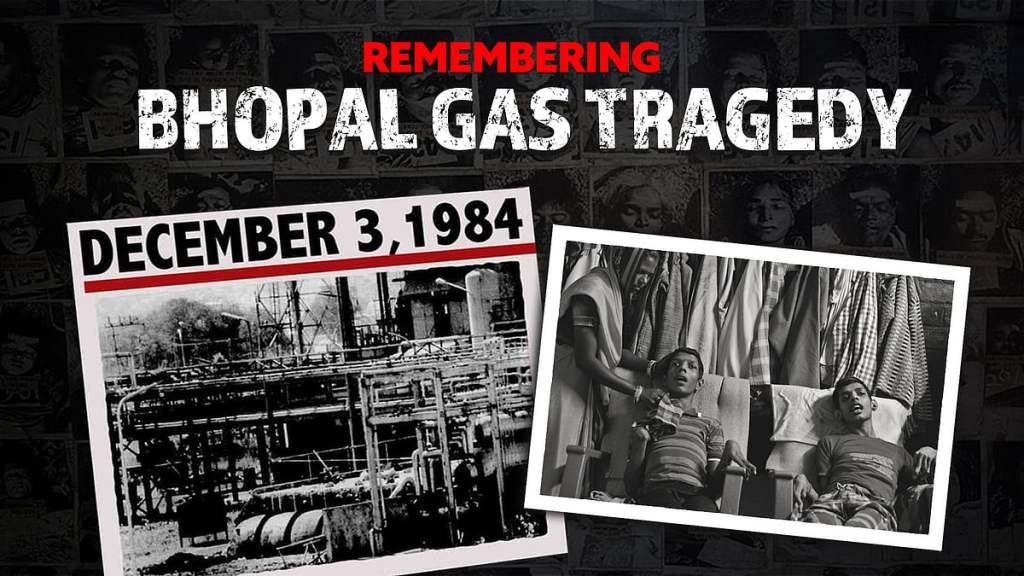
The Bhopal disaster was a catastrophic methyl isocyanate gas leak that occurred on December 3, 1984, at a Union Carbide Corporation pesticide plant in Bhopal, India. Starting around midnight, in the early hours of December 3, 1984, the leak continued into the early morning, affecting the densely populated areas surrounding the plant.
A government affidavit in 2006 stated that the leak caused approximately 558,125 injuries, including 38,478 temporary partial injuries and 3,900 severely and permanently disabling injuries. Estimates vary on the death toll, with the official number of immediate deaths being 2,259. Others estimate that 8,000 died within two weeks of the incident occurring, and another 8,000 or more died from gas-related diseases. In 1989, Union Carbide Corporation (UCC) of the United States paid $470 million (equivalent to $1.8 billion today) to settle litigation stemming from the disaster.
Today, the Union Carbide India Bhopal is still considered the world’s worst industrial disaster, resulting in thousands of immediate deaths and long-term health issues for over half a million people exposed to the toxic gas.
In 1985, I was hired by Union Carbide Corporation Limited [Linde Division] to develop and implement a World-Wide Health and Safety and Environmental Management System that would make sure that such a disaster would never happen again in any of the facilities and subsidiaries of Union Carbide Corporation.
With the assistance of the Danbury Connecticut Union Carbide Corporation head office IT the SCMS [SHEA Computer Management System] was developed and implemented. It took 10 years of hard work, trials and errors to finalize the project.
What if AI has been available in the years preceding the Bhopal disaster?
How could AI have facilitated my work in 1985?
Could AI have prevented the Bhopal disaster to happen?
The short answer is: AI could likely have prevented the Bhopal disaster, or at least drastically reduced the probability and scale, but only if the organization had chosen to use it responsibly.
The tragedy resulted from a systemic failure across engineering, operations, governance, and oversight, not from a single technical fault. Bhopal disaster investigations consistently identify maintenance neglect, disabled safety systems, understaffing, poor training, cost-cutting, and lack of emergency planning as central contributors.
AI could address many of these failure modes, but AI cannot compensate for deliberate managerial negligence or governance failure.
Below is a structured analysis of where AI could have intervened.
1. Predictive Maintenance and Early Failure Detection
One major cause of the disaster was non-functioning safety systems and poor maintenance. The MIC refrigeration unit, gas scrubber, and flare system were not operational when the leak occurred.
AI capability
Modern industrial AI systems can perform:
- Predictive maintenance on valves, pumps, and storage tanks
- Anomaly detection in pressure, temperature, and chemical reactions
- Failure probability modeling using sensor data
What AI could have detected
Before the disaster:
- Abnormal temperature increase in the MIC tank
- Abnormal pressure build-up
- Malfunctioning refrigeration system
- Corrosion patterns in valves
- Abnormal reaction kinetics
AI models trained on plant data would likely flag a runaway chemical reaction risk hours before catastrophic failure.
2. Real-Time Process Monitoring and Autonomous Safety Shutdown
The Bhopal plant relied heavily on manual monitoring by operators, sometimes one worker supervising dozens of instruments.
AI-enabled process control
Modern plants use:
- AI-assisted SCADA and digital twins
- Automated hazard detection algorithms
- Autonomous emergency shutdown systems
Potential AI intervention
An AI system could have:
- Detected the water contamination in the MIC tank
- Triggered automatic plant shutdown
- Activated flare systems and scrubbers
- Initiated containment procedures
Even 10–20 minutes of earlier response could have significantly reduced the volume of released gas.
3. Chemical Process Simulation and Digital Twins
The disaster involved a runaway exothermic reaction when water mixed with methyl isocyanate, producing extreme heat and pressure.
Modern AI capability
AI-enhanced digital twins simulate chemical plant behavior in real time.
They allow engineers to test:
- Abnormal chemical reactions
- Contamination scenarios
- Tank over-pressure dynamics
- Thermal runaway risk
Impact
This would likely have identified that large-volume MIC storage without redundant cooling and safety systems was inherently unsafe.
4. AI-Assisted Training and Human Factors
A major issue was poorly trained workers operating a highly dangerous plant, sometimes using manuals in a language they did not speak.
AI training tools
AI could provide:
- Multilingual operational interfaces
- Simulation-based training environments
- Real-time decision support
- Operator error prediction
This would reduce risks from:
- Misunderstanding procedures
- Delayed reaction to alarms
- Improper maintenance steps.
5. AI Risk Analysis and Corporate Decision Intelligence
Many safety systems were intentionally disabled to save money.
AI can support enterprise-level risk modeling:
- Scenario analysis for catastrophic risk
- Safety investment optimization
- Predictive accident modeling
For example:
An AI risk model would flag that:
Disabling refrigeration + under-staffing + storing 40 tons of MIC
= high-probability catastrophic release scenario
But this only works if leadership chooses to act on the warning.
6. Geo-Spatial and Urban Risk Modeling
The plant was located near densely populated neighborhoods, amplifying casualties.
AI-driven tools today can model:
- Toxic plume dispersion
- Wind patterns
- Evacuation zones
- Population exposure risk
This would have influenced:
- Plant siting
- Emergency evacuation planning
- Urban zoning regulations.
7. AI-Enabled Emergency Response
When the gas escaped:
- Alarms failed
- The public was not warned
- Hospitals had no information about the chemical.
AI-enabled emergency systems could have:
- Automatically issued mass alerts
- Predicted toxic cloud trajectory
- Provided medical treatment guidance
- Coordinated emergency response.
The Critical Reality: AI Cannot Fix Governance Failure
The most important lesson is this:
Bhopal was not primarily a technology failure.
It was a governance failure.
The plant already had safety systems. They were:
- Turned off
- Poorly maintained
- Understaffed
- Ignored.
AI could detect problems, but it cannot force organizations to act responsibly.
Strategic Conclusion
AI could have reduced the probability of Bhopal through:
- Predictive maintenance
- Automated safety shutdown systems
- Chemical process simulation
- Operator training and decision support
- Enterprise risk modeling
- Emergency response optimization
However, AI is not a substitute for corporate responsibility, regulatory enforcement, and safety culture.
If the same cost-cutting mindset existed, even the most advanced AI system could simply be ignored or disabled.
Strategic insight:
Bhopal demonstrates that catastrophic risk is rarely a single failure. It is usually the alignment of multiple organizational failures: technology, management, training, and regulation.
AI can reduce technical risk.
It cannot replace ethical governance.
J. Michael Dennis ll.l., ll.m.
AI Foresight Strategic Advisor

Based in Kingston, Ontario, Canada, J. Michael Dennis is a former barrister and solicitor, a Crisis & Reputation Management Expert, a Public Affairs & Corporate Communications Specialist, a Warrior for Common Sense and Free Speech. Today, J. Michael Dennis help executives and professionals understand, evaluate, and responsibly deploy AI without hype, technical overload, or strategic blindness.
 J. Michael Dennis ll.l., ll.m. Live
You must be logged in to post a comment.