Tags
AI Strategic Risks, Decision Automation, Institutional Vulnerability, Intellectual Property Leakage, Regulatory Backlash, The Future of AI
By J. Michael Dennis
AI Foresight Strategic Advisor
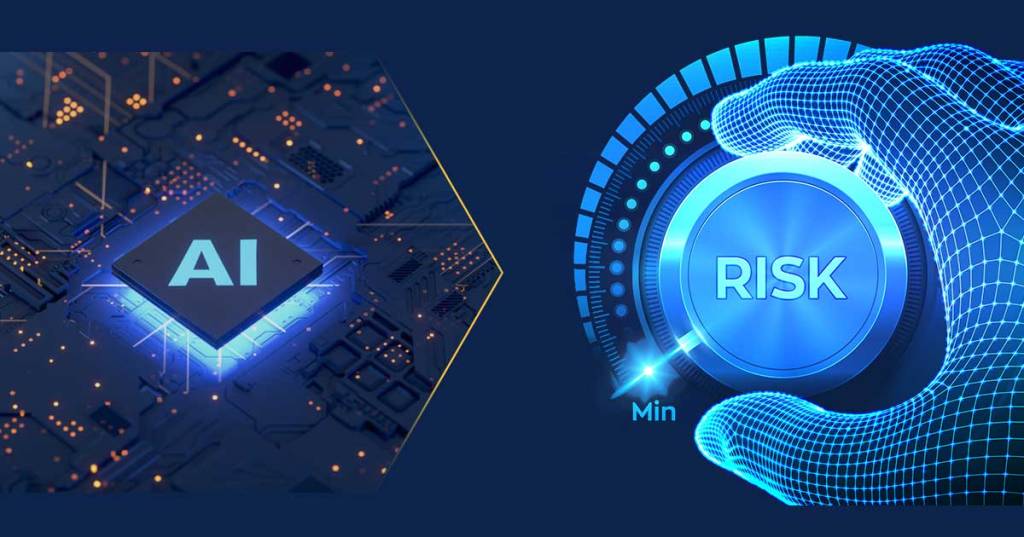
Artificial intelligence is rapidly becoming embedded in the operational fabric of modern organizations. From automated customer service and predictive analytics to decision-support systems and generative content tools, AI promises efficiency, speed, and competitive advantage. Yet beneath this technological momentum lies a largely underestimated set of strategic risks. Many organizations approach AI adoption primarily as a capability upgrade rather than as a structural transformation of their operational and governance systems. As a result, the strategic vulnerabilities created by AI integration are often poorly understood.
One of the most significant risks is operational dependence on external models. Much of today’s AI capability is delivered through third-party platforms and cloud-based models controlled by external technology providers. Organizations increasingly rely on these systems for core functions while having limited visibility into their architecture, training data, or long-term availability. This dependency introduces a new form of infrastructure risk. Pricing changes, model deprecations, geopolitical disruptions, or vendor policy shifts can instantly affect organizational operations. In effect, strategic capabilities may become contingent on technological assets that the organization neither controls nor fully understands.
A second risk involves intellectual property leakage. AI systems often require large volumes of internal data to generate value. When proprietary documents, internal communications, research material, or strategic analyses are processed through external AI models, sensitive knowledge may inadvertently be exposed. Even when providers promise strong safeguards, the boundary between user input, model training, and system retention remains opaque to most organizations. Without strict governance policies, the very process of leveraging AI can erode the confidentiality of an organization’s intellectual capital.
A third concern arises from decision automation failures. AI systems are frequently deployed to assist or automate decisions in areas such as finance, risk assessment, hiring, logistics, and healthcare. However, these systems operate through statistical pattern recognition rather than contextual understanding. When organizations over-trust automated outputs, errors can propagate rapidly across operational systems. Biases in training data, model drift, or unanticipated edge cases can produce flawed recommendations that are accepted without sufficient human scrutiny. The resulting failures may not only generate operational disruption but also expose organizations to reputational and legal consequences.
Finally, organizations face the growing possibility of regulatory backlash. Governments worldwide are moving to establish legal frameworks governing AI transparency, accountability, and safety. Regulations may impose obligations regarding explainability, data provenance, auditing, and liability for automated decisions. Organizations that adopt AI aggressively without anticipating these regulatory developments risk building operational systems that later become non-compliant. Retrofitting compliance into AI-enabled processes can be expensive, disruptive, and strategically destabilizing.
Taken together, these risks illustrate a broader strategic reality: AI is not merely a technology deployment but a systemic organizational shift. The adoption of AI changes how knowledge flows, how decisions are made, and where operational control resides. Without careful governance, these shifts can create hidden dependencies and vulnerabilities that only become visible once they begin to fail.
The central strategic lesson is therefore clear: AI adoption without strategic foresight creates institutional vulnerability. Organizations must move beyond enthusiasm for AI capabilities and instead develop a disciplined framework for evaluating technological dependence, protecting intellectual property, maintaining human oversight in critical decisions, and anticipating regulatory evolution. Only by integrating AI within a comprehensive strategy of risk awareness and governance can organizations ensure that the pursuit of technological advantage does not inadvertently undermine their long-term resilience.
J. Michael Dennis ll.l., ll.m.
AI Foresight Strategic Advisor

Based in Kingston, Ontario, Canada, J. Michael Dennis is a former barrister and solicitor, a Crisis & Reputation Management Expert, a Public Affairs & Corporate Communications Specialist, a Warrior for Common Sense and Free Speech. Today, J. Michael Dennis help executives and professionals understand, evaluate, and responsibly deploy AI without hype, technical overload, or strategic blindness.
 J. Michael Dennis ll.l., ll.m. Live
You must be logged in to post a comment.